Project 2

Summary

Intent

A puzzle-driven investigation level designed as a structural framework for environmental storytelling and narrative design.

Pitch

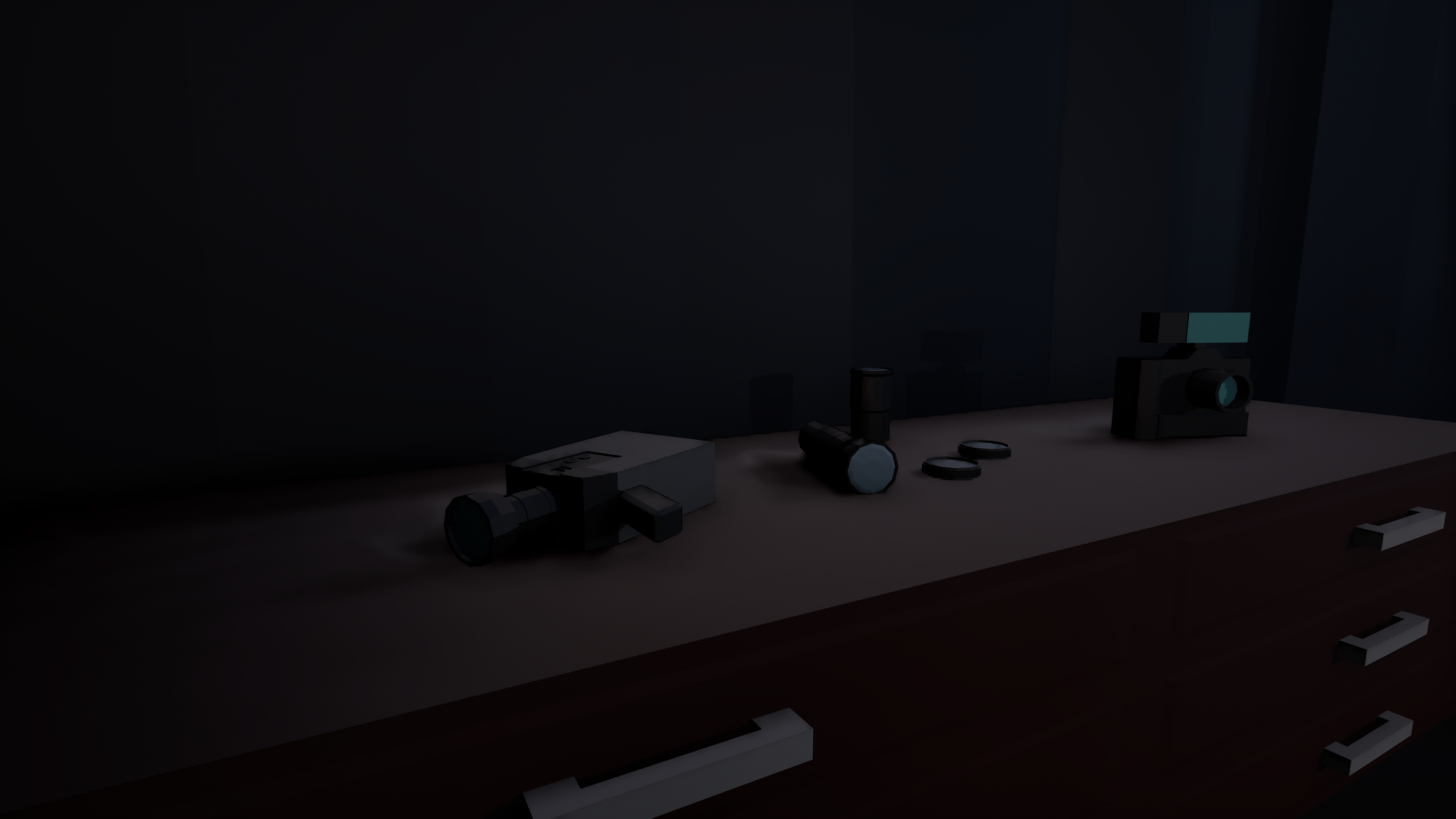
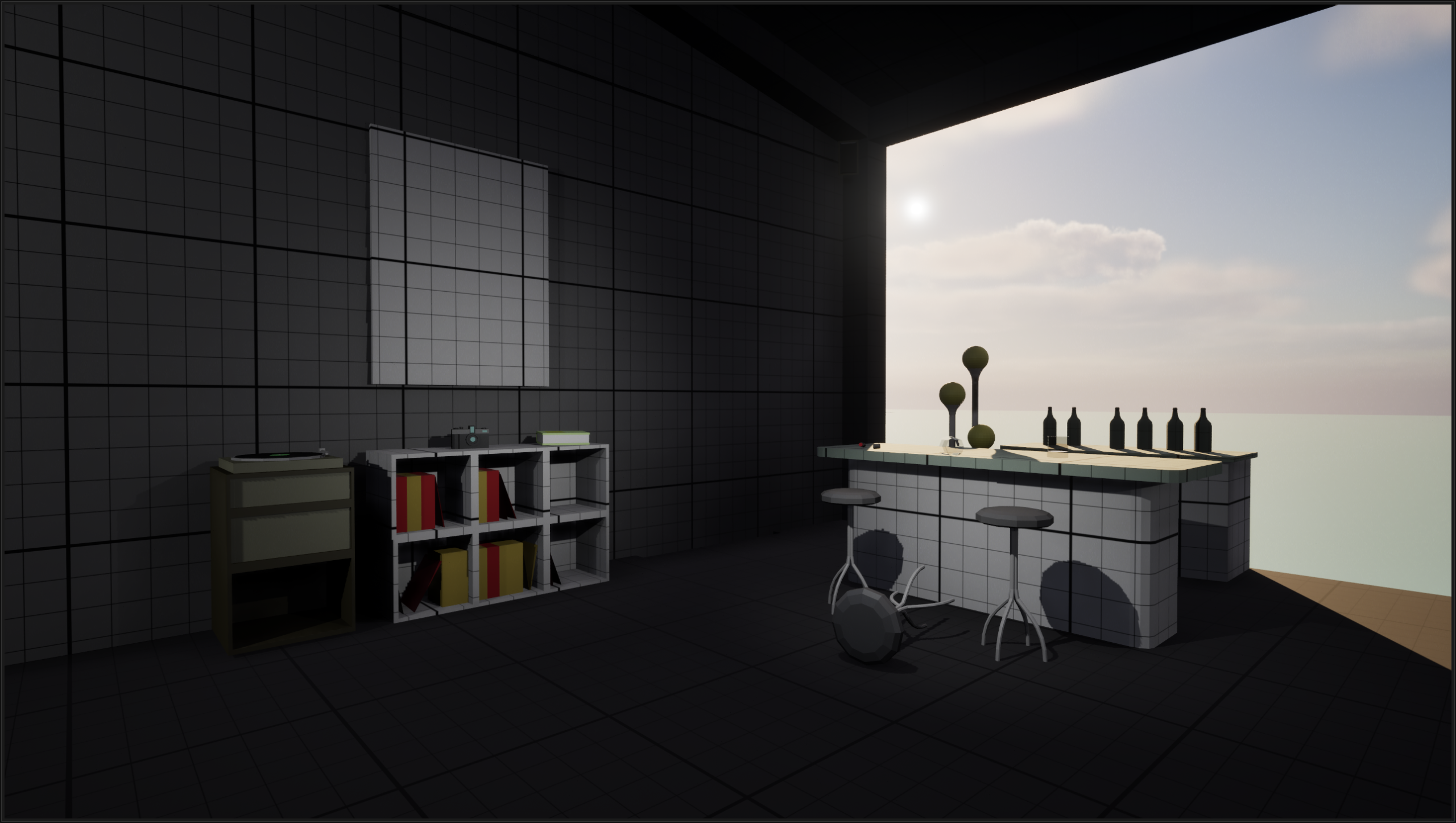
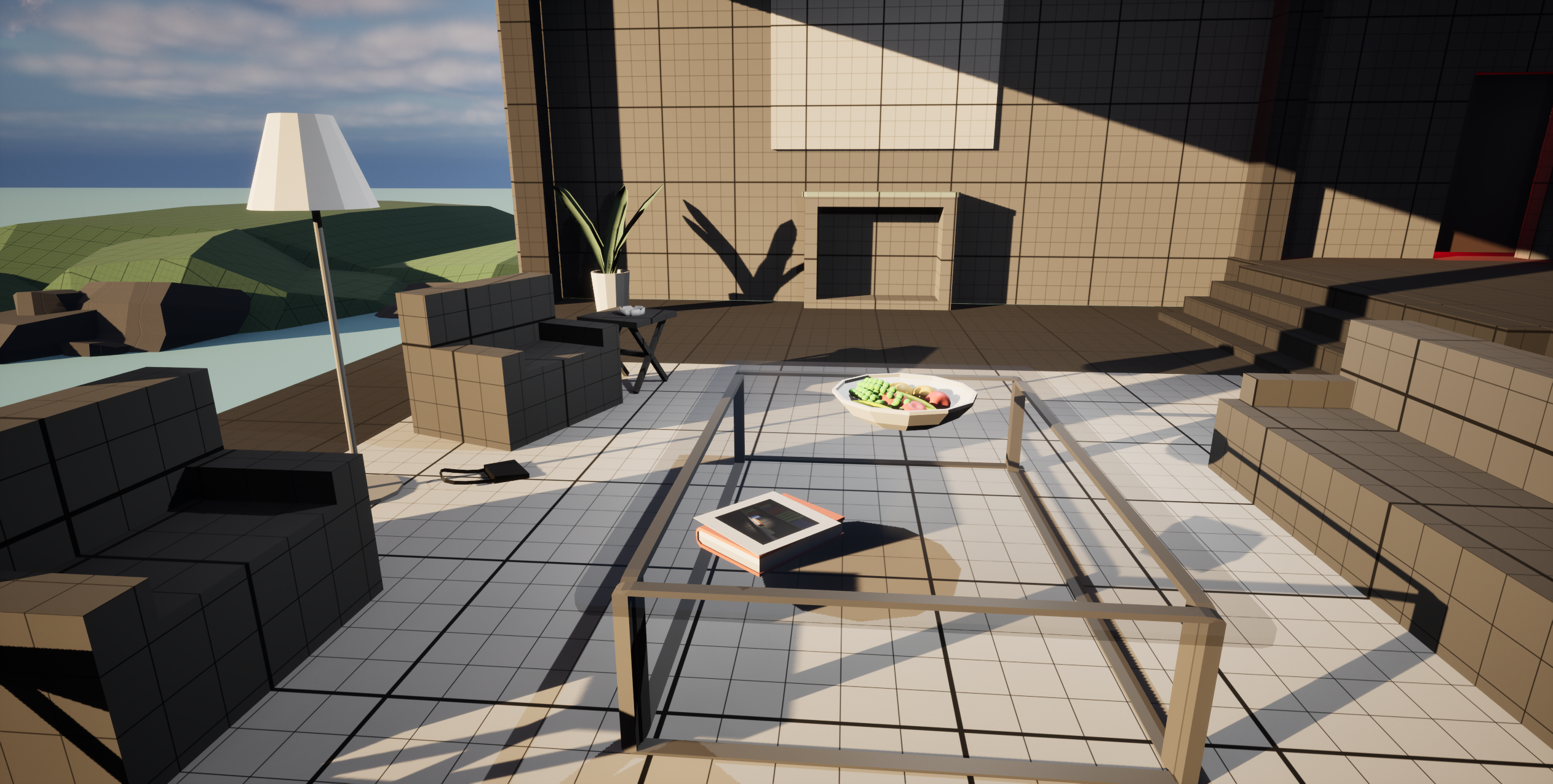
“You explore the home of a famous photographer, searching for traces of a missing person.
By developing photographs in the darkroom, new clues emerge”

Tools
  • Unreal Engine 5
  • Blender
  • Illustrator
  • Photoshop 
Time 
  • 2 weeks of pre-production
  • 3 weeks of production

TOP-DOWN:

Progression

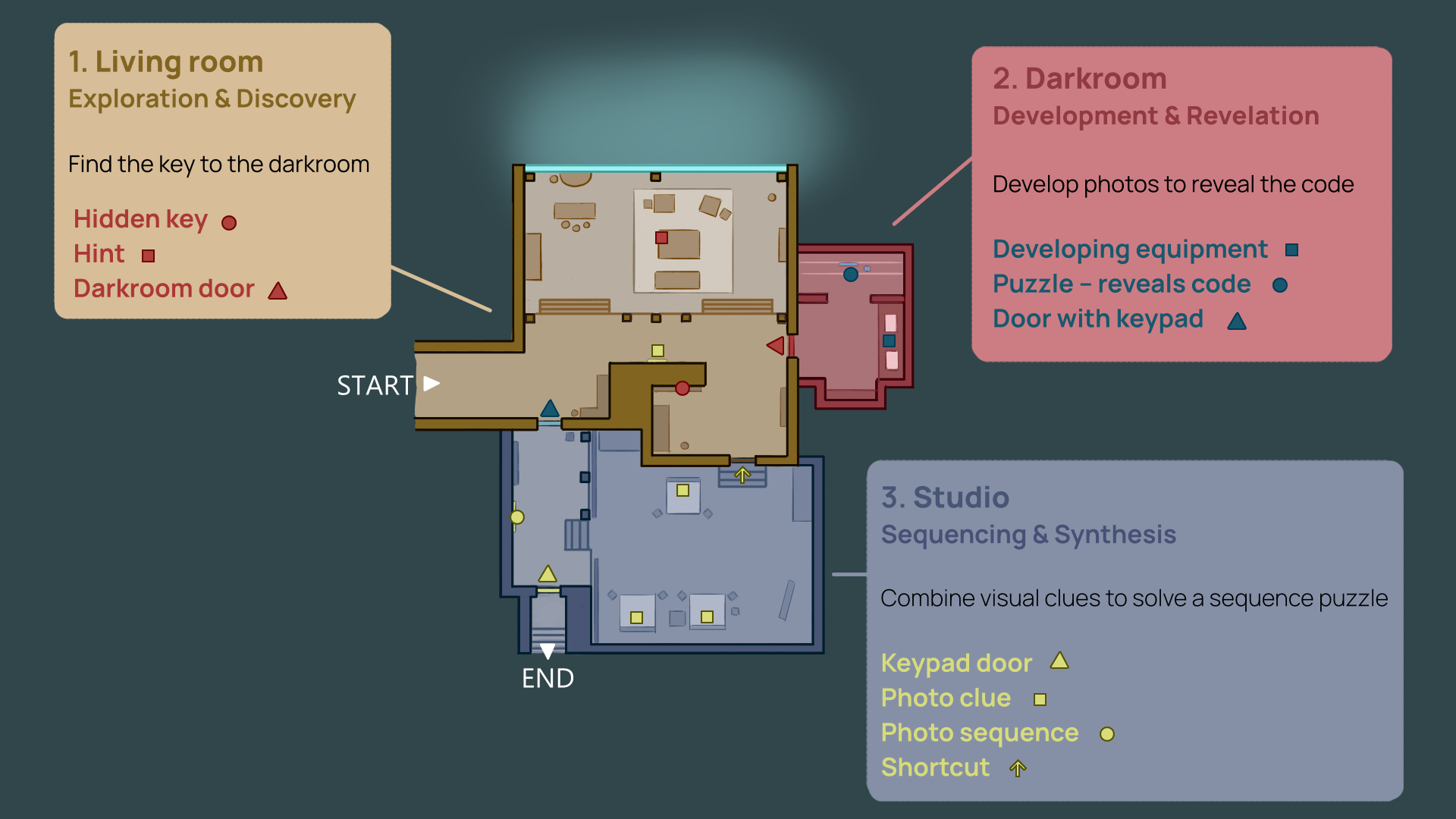
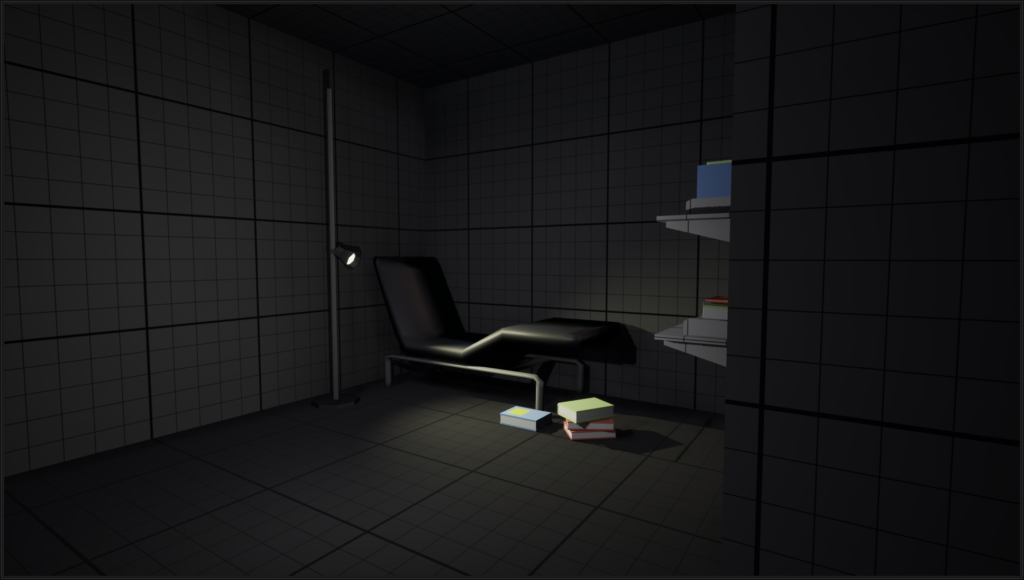
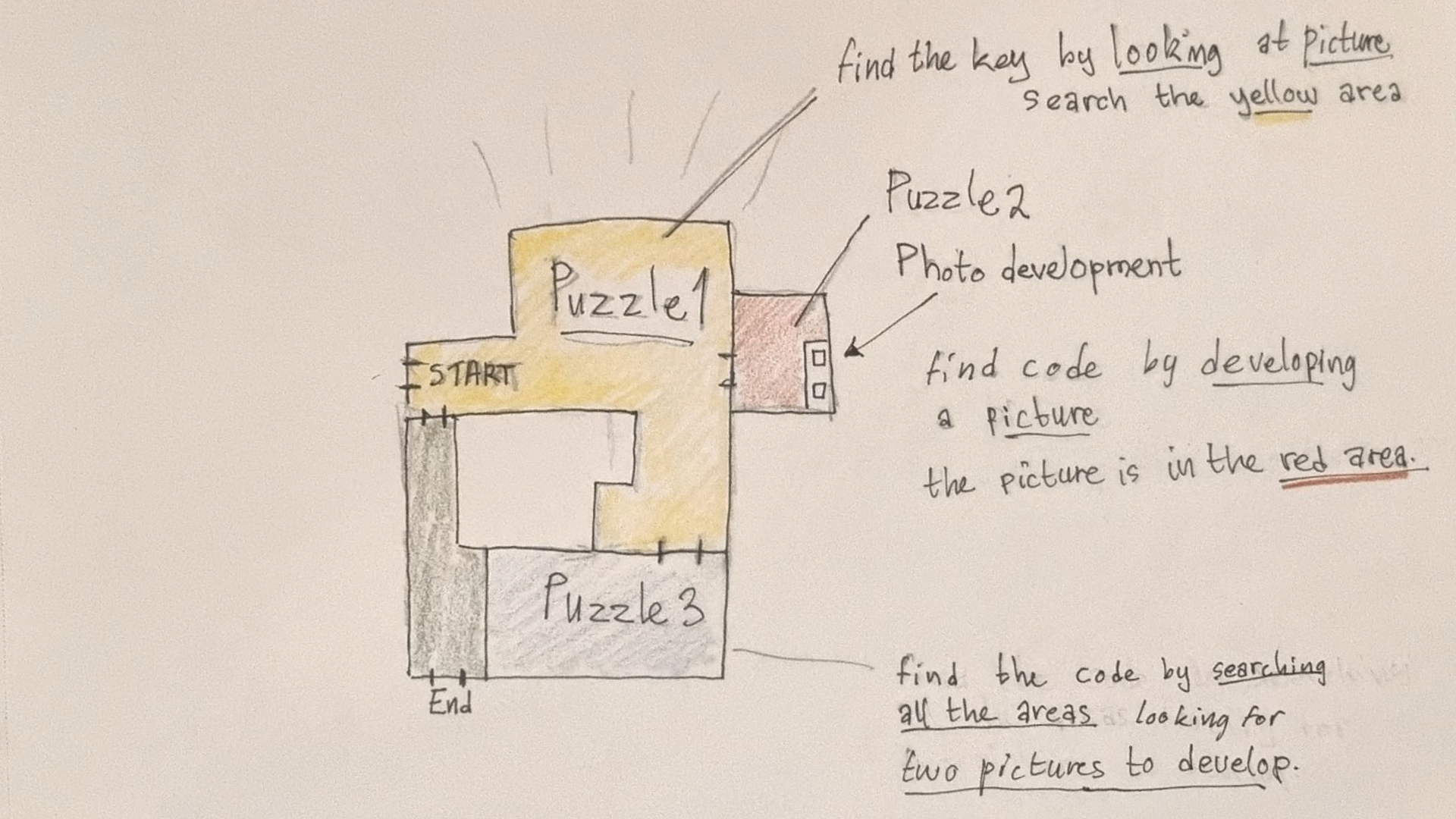
The level contains of 3 rooms

Design:

Puzzle Design

The puzzles are structured to gradually introduce mechanics and observation-based gameplay, increasing in complexity and combining previously learned elements in the final puzzle.

Puzzle 1 – Exploration & Discovery

Introduces exploration and the clue system.
The player finds a photograph that hints at a specific location in the house. By investigating that location, the player discovers a key hidden inside a book, which unlocks the darkroom.

Introduction

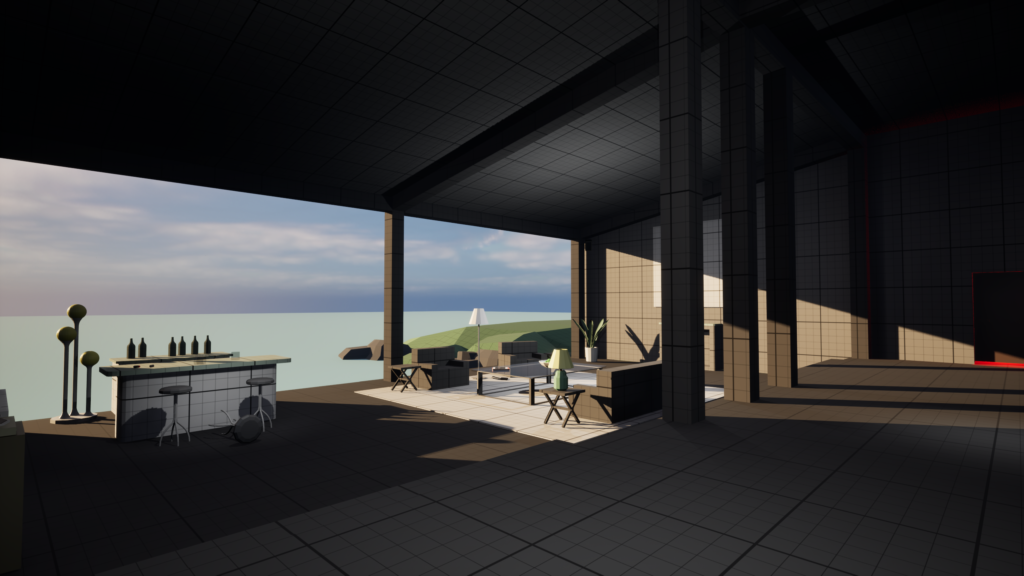
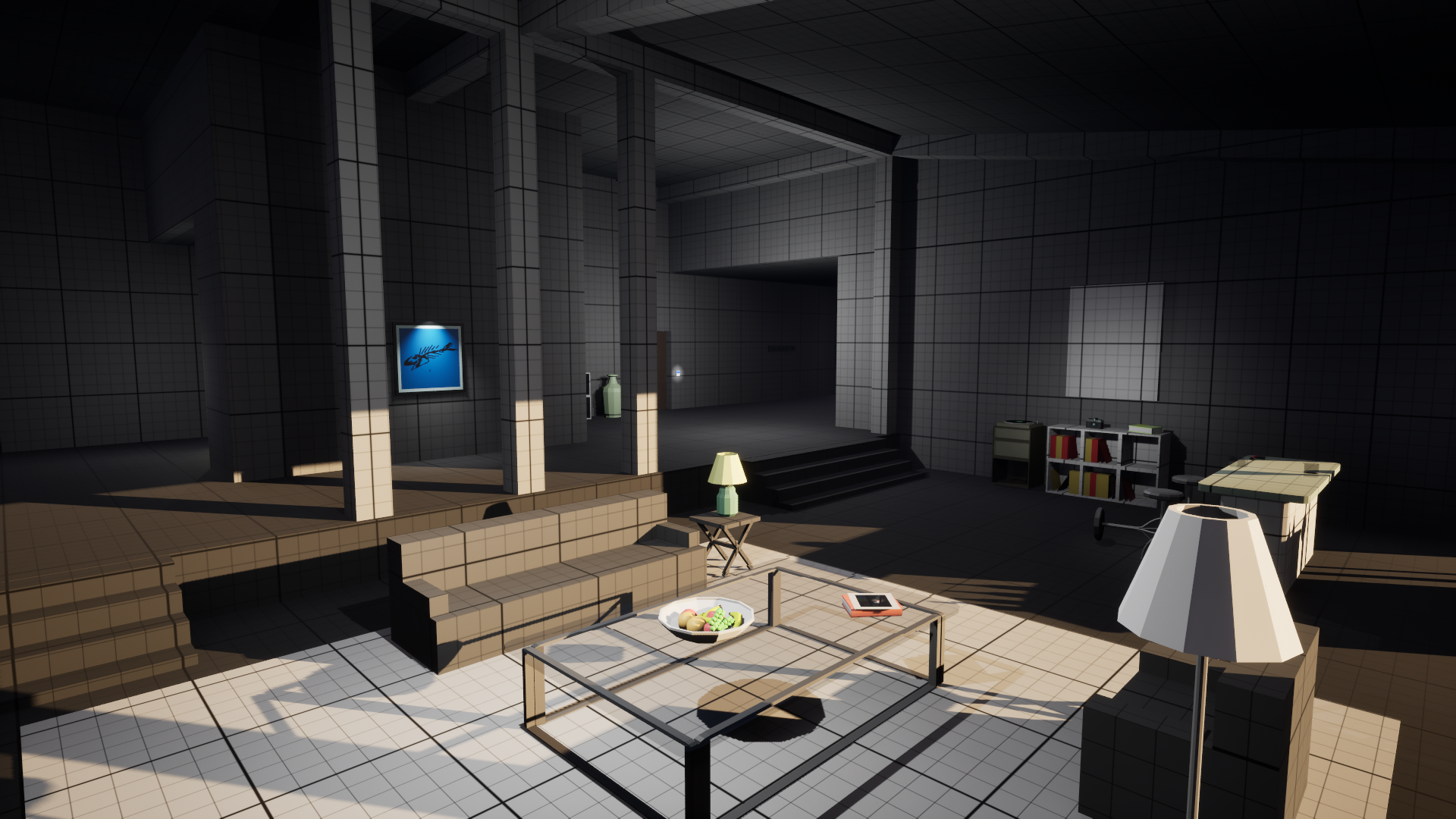
The player is introduced to the house and encouraged to explore the environment.

Exploration

The level is structured into distinct zones to pace exploration and control how much information the player is exposed to at a time, preventing the player from feeling overwhelmed.

Clue

The player finds a photograph showing a location in the house. This introduces the idea that photographs contain important information and can be used as clues.

Investigation & Reward

By investigating the location shown in the photograph, the player discovers a key hidden inside a book. This reinforces the idea that careful observation leads to progression.

Puzzle 2 – Puzzle 2 – The Darkroom

Puzzle 2 introduces the darkroom and the core gameplay mechanic of developing photographs to reveal new information.

Introduction

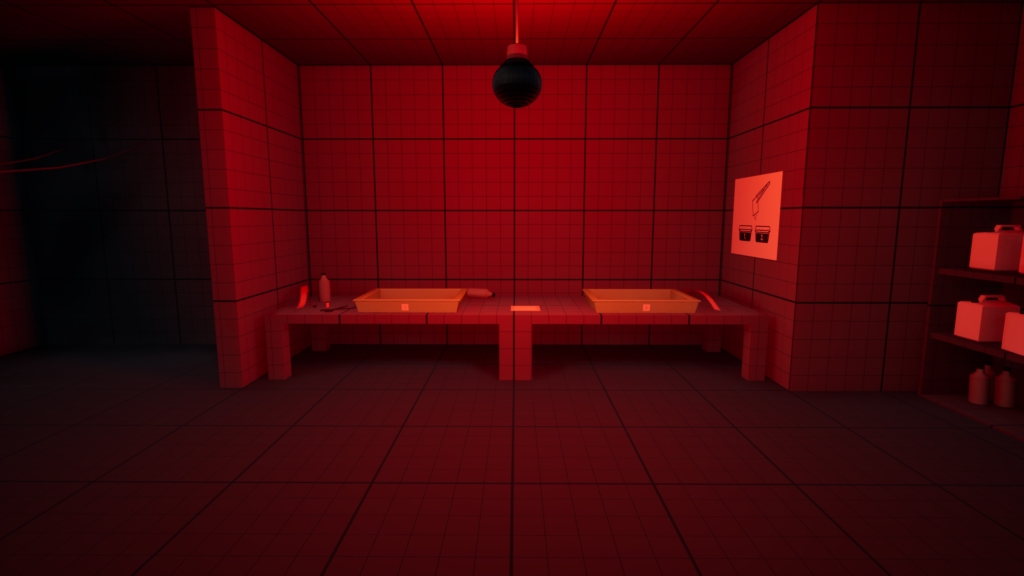
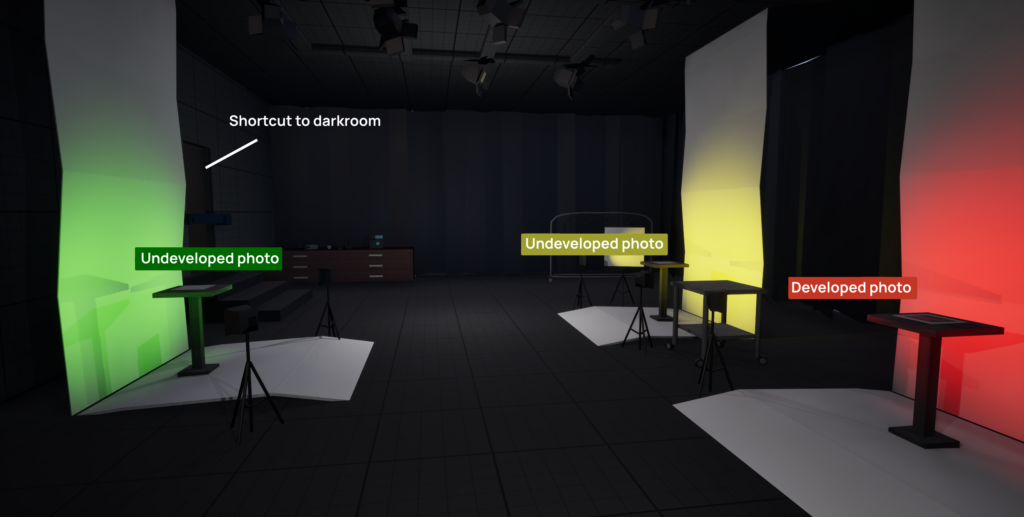
The player enters the darkroom and is immediately introduced to the developing process, with the equipment placed directly in front of the player.

Developing the Photograph

By dipping the photograph into two chemical baths, a new image appears, revealing a keypad door located elsewhere in the house. The photograph now acts as information that guides the player’s next objective.

A Second Photograph

To unlock the door, the player must develop a second photograph, which reveals the final number needed for the keypad. The player must now combine information from multiple photographs to progress.

Puzzle 3 – Exploration & Discovery

Puzzle 3 combines information from photographs, colors, and environmental clues to solve the final keypad puzzle.

Color Coding

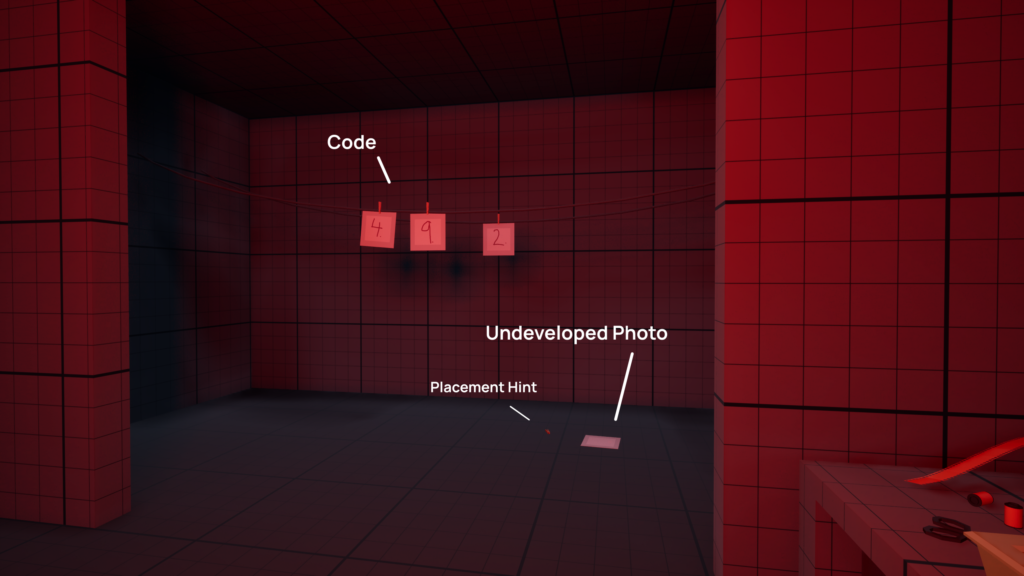
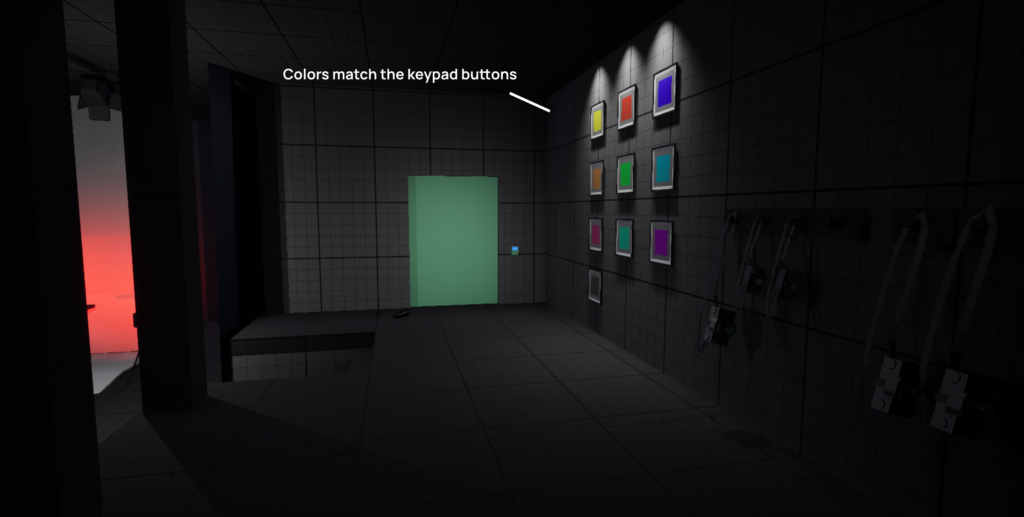
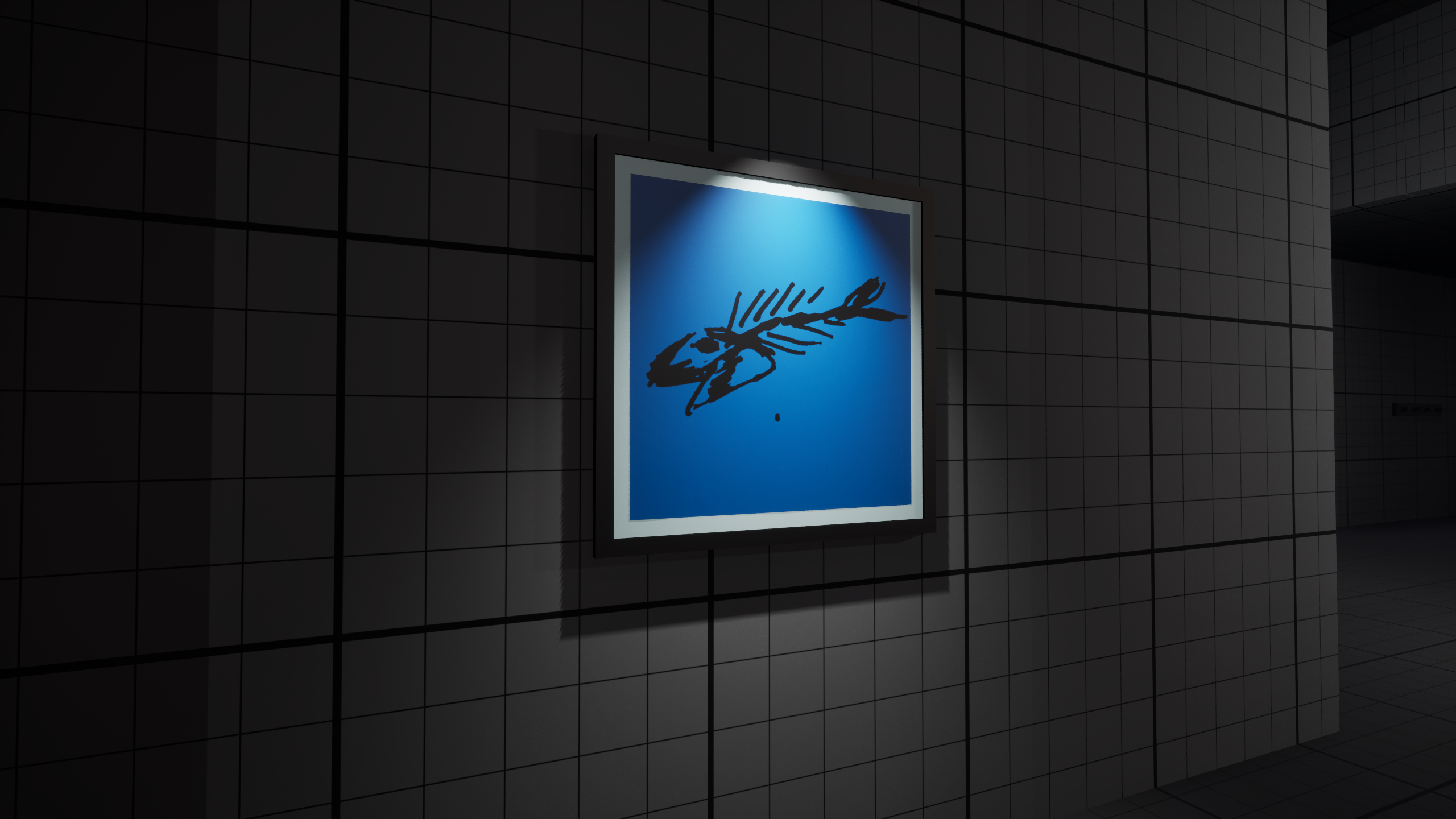
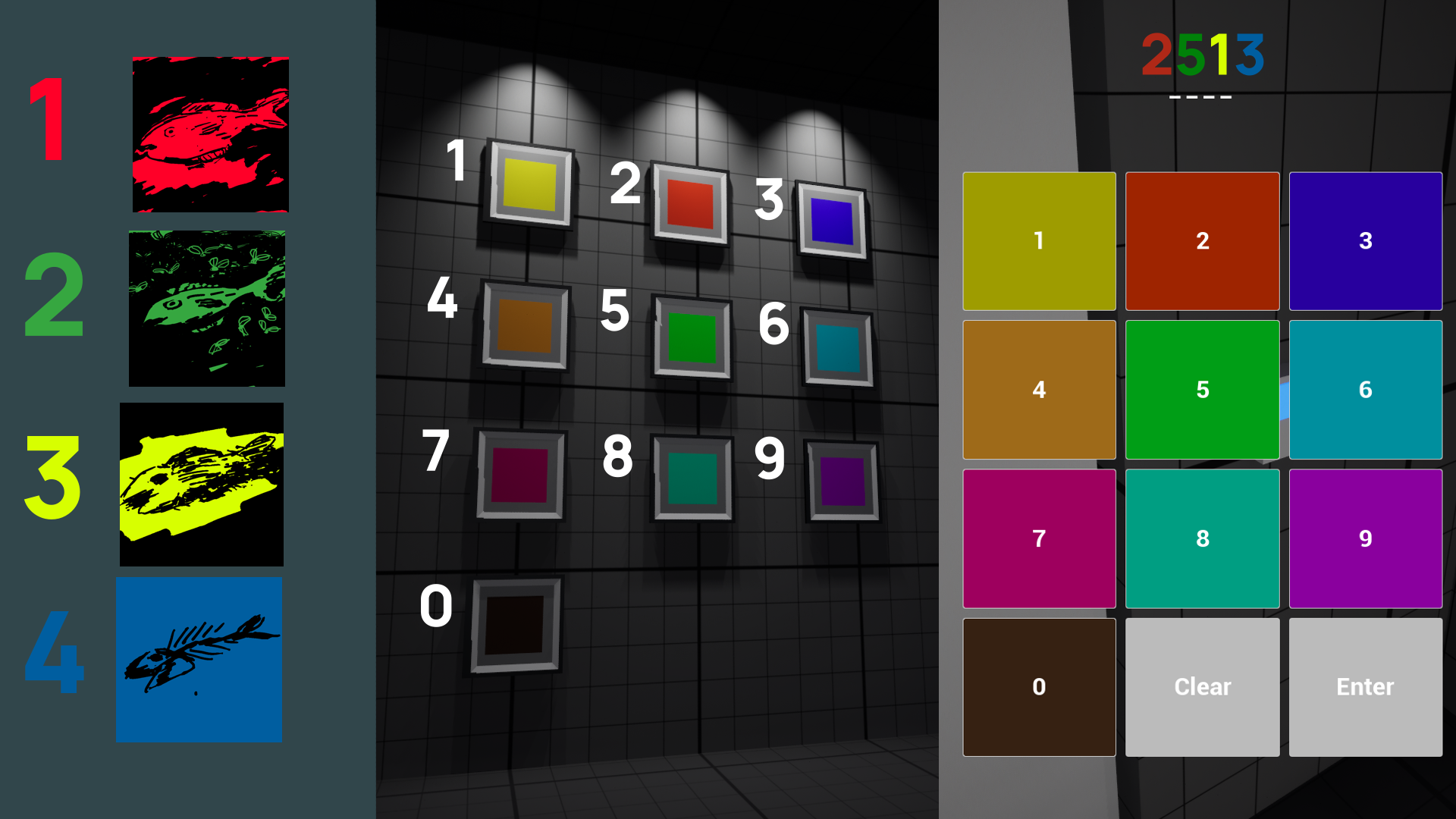
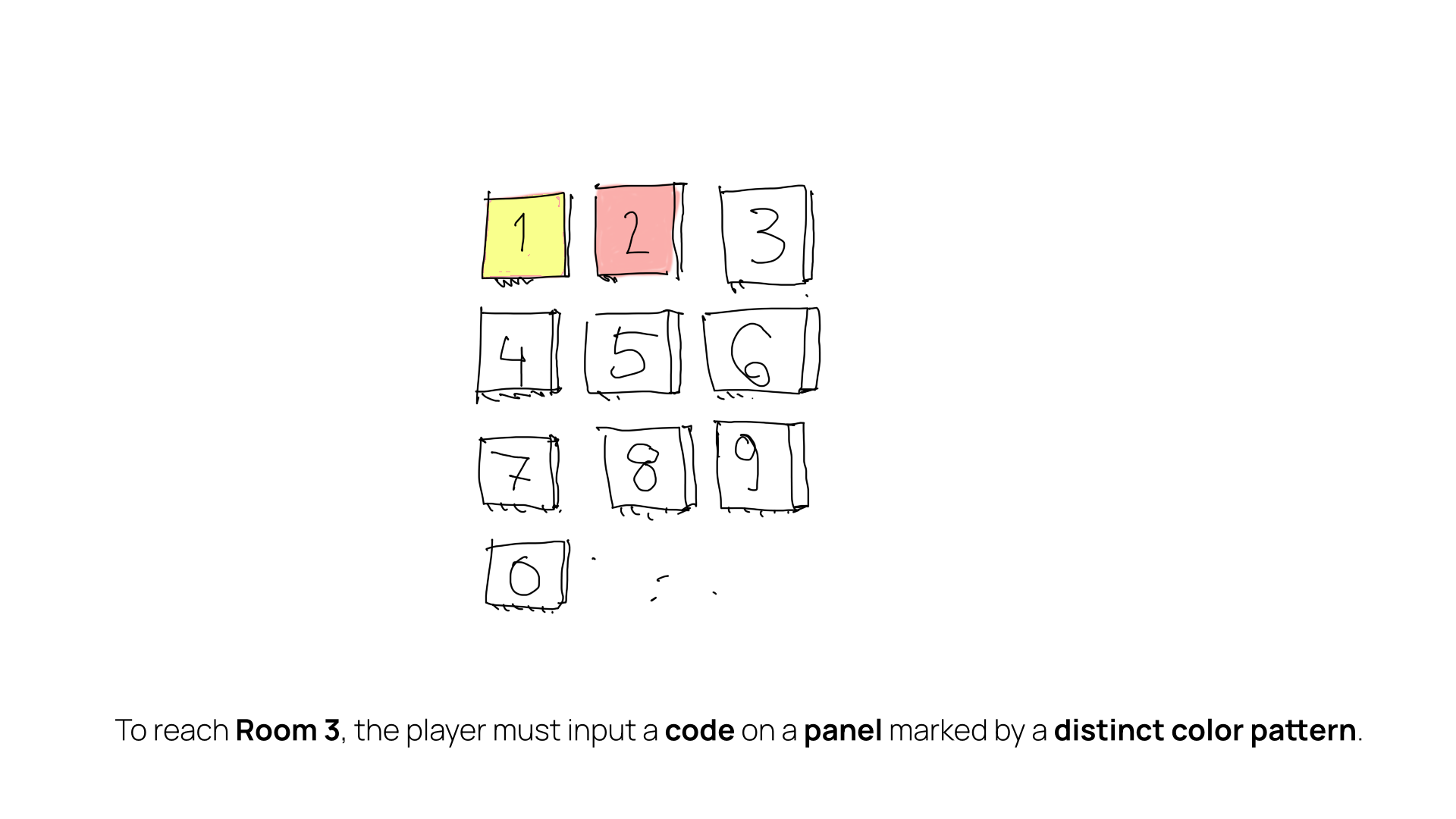
The player enters the hallway and encounters a keypad with color-coded buttons. Next to the door is a row of color-coded photographs, arranged in the same order as the buttons on the keypad.

The Photo Studio

The player enters the hallway and encounters a keypad with color-coded buttons. Next to the door is a row of color-coded photographs, arranged in the same order as the buttons on the keypad.

Developing the Photographs

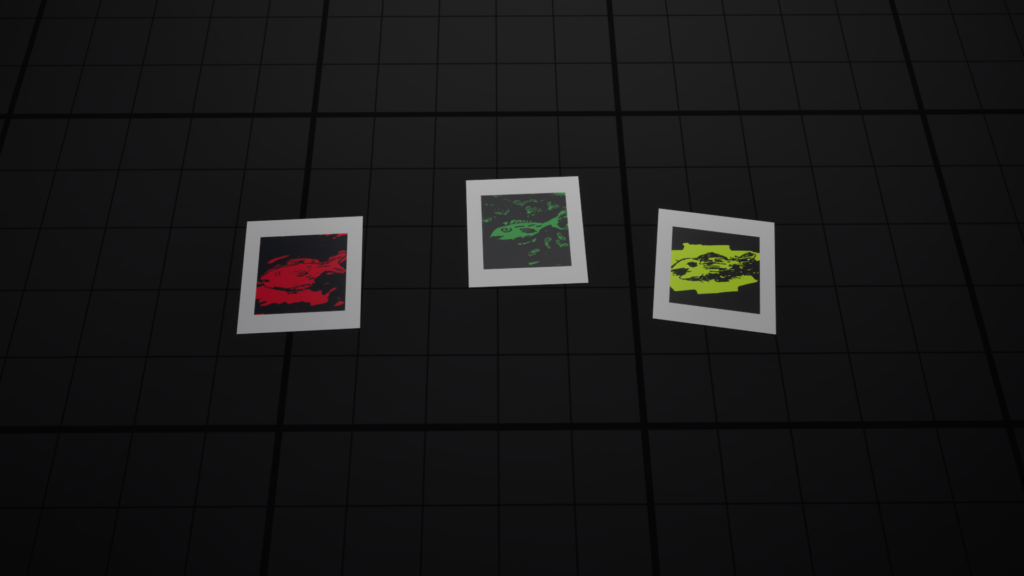
By developing the photographs in the darkroom, the player discovers additional images. The images show the same subject in different stages, which introduces the idea that the images must be placed in chronological order.

The Final Number

The final number is found earlier in the level, requiring the player to revisit a previous room and connect information from multiple areas.

Combining Color and Order

By developing the photographs in the darkroom, the player discovers additional images. The images show the same subject in different stages, which introduces the idea that the images must be placed in chronological order.

Movement:

Throughout the level, the player encounters environmental interactions designed to reinforce presence and scale within the space.

Ancient statues and pillars, large fish bones, and glowing mushrooms invite the player to move closer, encouraging curiosity and a sense of inhabiting the environment rather than merely observing it.

Process:

Research and Exploration:

I began the project with a loose idea and spent the first two weeks exploring different directions before committing to a final concept.

Concepts

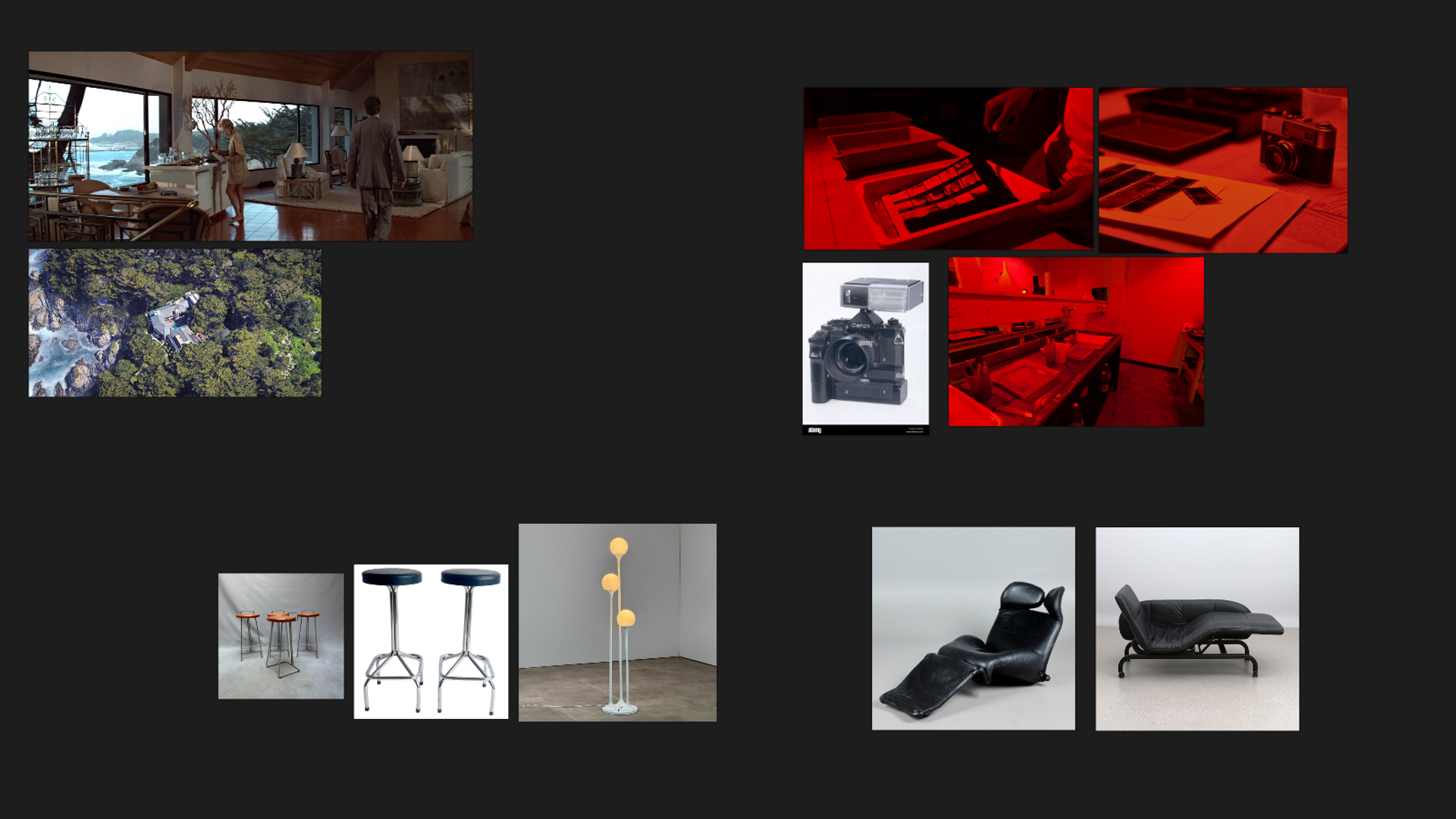
From the beginning, I aimed to create a damp, mossy environment with a restrained color palette where natural formations blend with architectural elements. References such as Roman baths helped shape the relationship between water, stone, and structure.

Early puzzle ideas inspired by ancient Greek steam mechanisms were later removed, allowing the project to focus on atmosphere, spatial composition, and environmental storytelling.

Visual Experimentation

Alongside early sketches, I began blocking out rooms and modeling and texturing a small set of assets, experimenting with materials and stylized pixel textures. The project offered a chance to explore the visual direction of the environment more freely.

Building the level:

As the blockout evolved, the level gradually shifted toward a cave-like environment where ancient architectural elements are introduced step by step. Testing a room built around a strong player viewpoint helped clarify the direction of the project: a descent into a subterranean space, guided by atmosphere, spatial composition, and subtle narrative.

As the level expanded, I continued blocking out larger spaces, creating additional assets when needed while keeping the underlying geometry simple.

I began by creating a small kit of reusable base forms in Blender, which formed the foundation of the cave environment.

Using this kit of reusable forms, I began assembling rooms in Unreal, using rock formations to define the playable boundaries.

Iteration:

Example of iteration: The initial layout directed the player’s view into a wall rather than toward the cave opening beside the pillar. Adding a few steps raised the player’s viewpoint, redirecting attention toward the cave. Later, this moment was reinforced with bats emerging from the opening.

When new needs emerged, I created additional assets, but my goal remained to keep the underlying geometry simple and controlled, allowing the overall space to feel organic rather than engineered.

Closing Thoughts:

Designed as an opening sequence, the level introduces the tone and spatial language of the world while hinting at directions that could be explored further.