In Every Dream Home a Heartache

An investigation level built around photo development

Summary

Intent

To build a puzzle-driven investigation level around a photo development mechanic, and explore how environment, puzzles, and narrative can work together to create a cohesive detective experience.

Pitch

“You explore the home of a famous photographer, searching for traces of a missing person.
By developing photographs in the darkroom, new clues emerge”

Tools
  • Unreal Engine 5
  • Blender
  • Illustrator
  • Photoshop 
Time 
  • 2 weeks of pre-production
  • 3 weeks of production

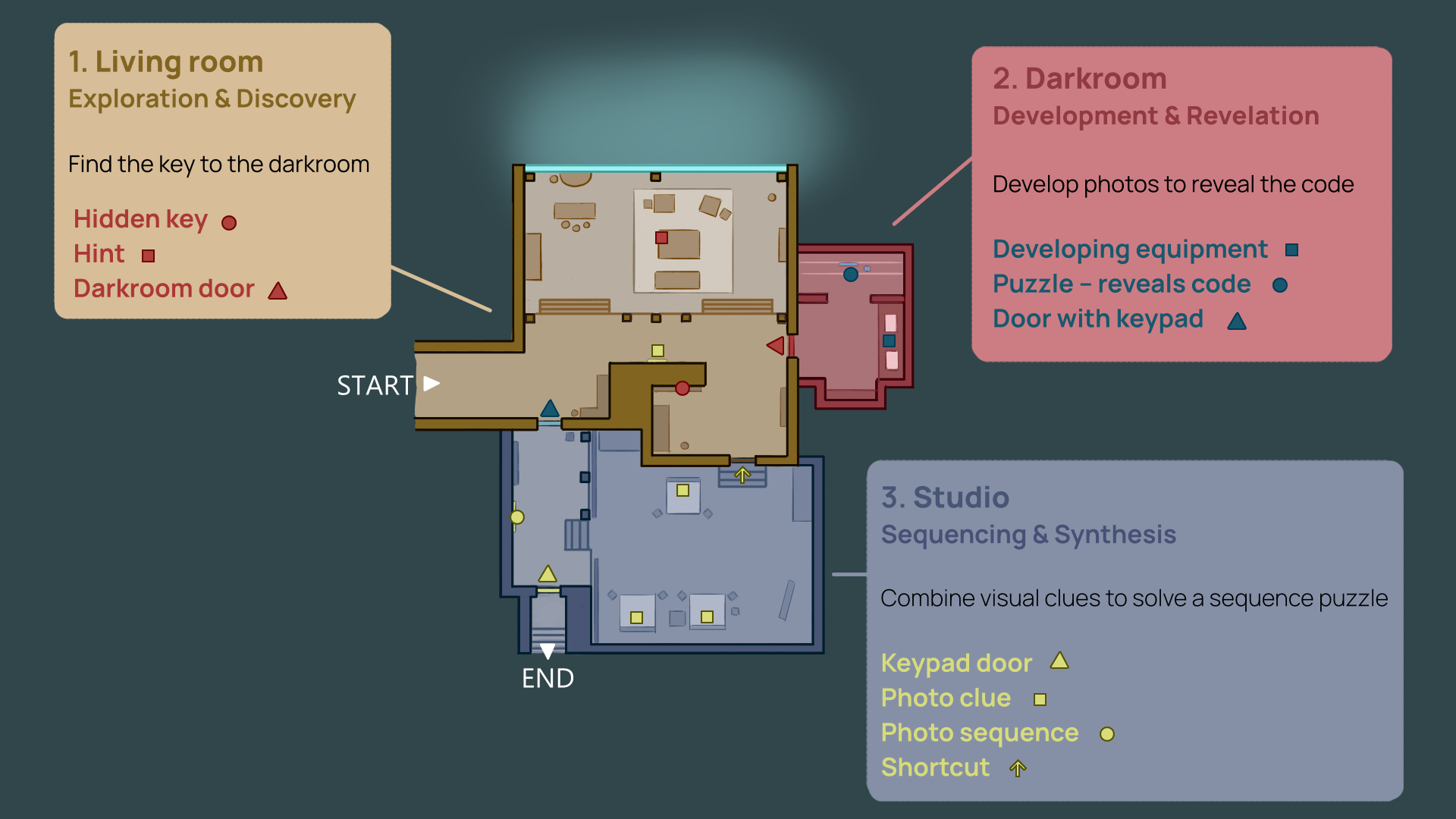
TOP-DOWN:

Progression

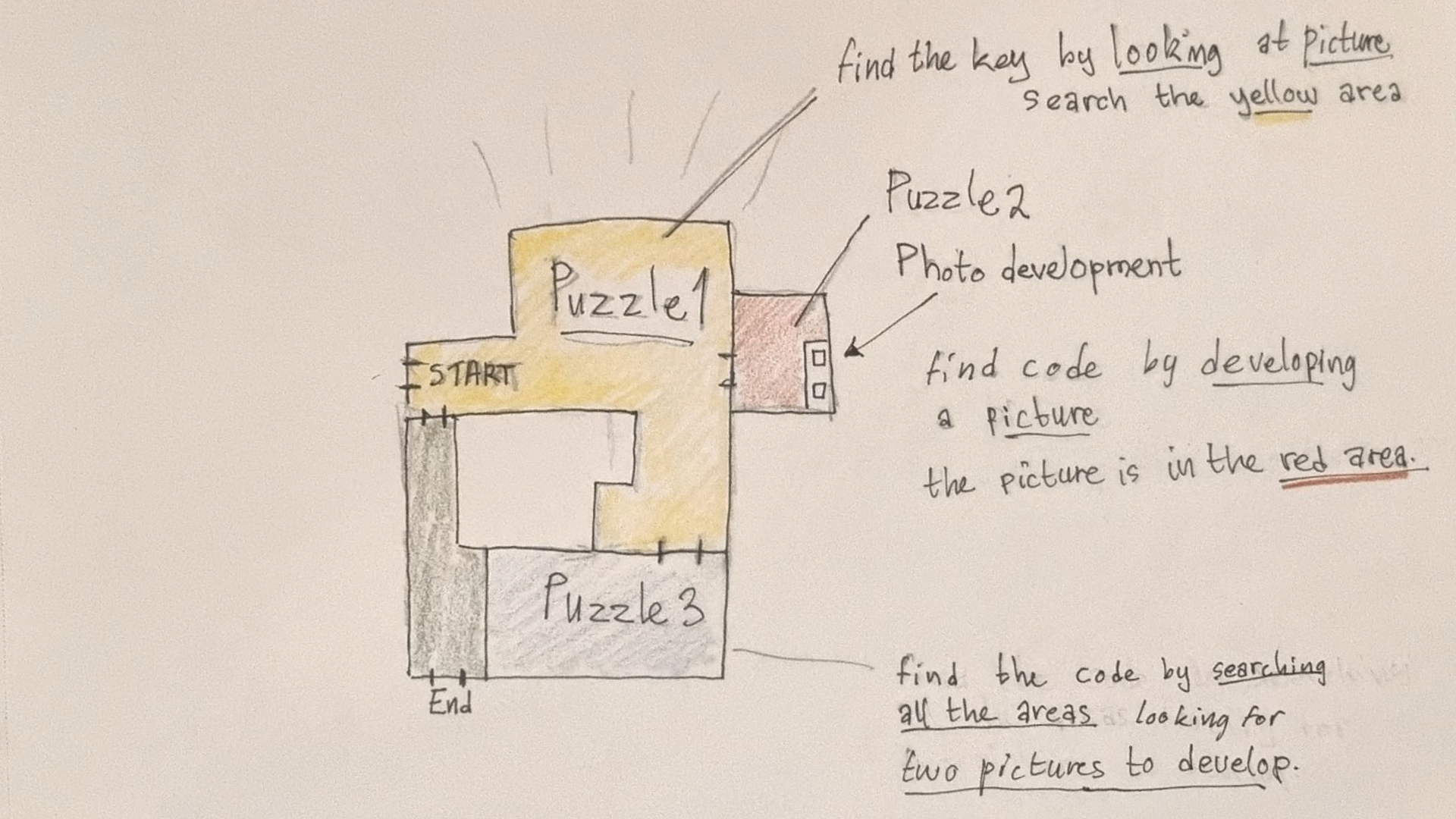
The level is divided into three areas, each containing a puzzle. Each puzzle unlocks the next area. The final area also opens a shortcut to the darkroom.

Setting

Inspiration & Tone

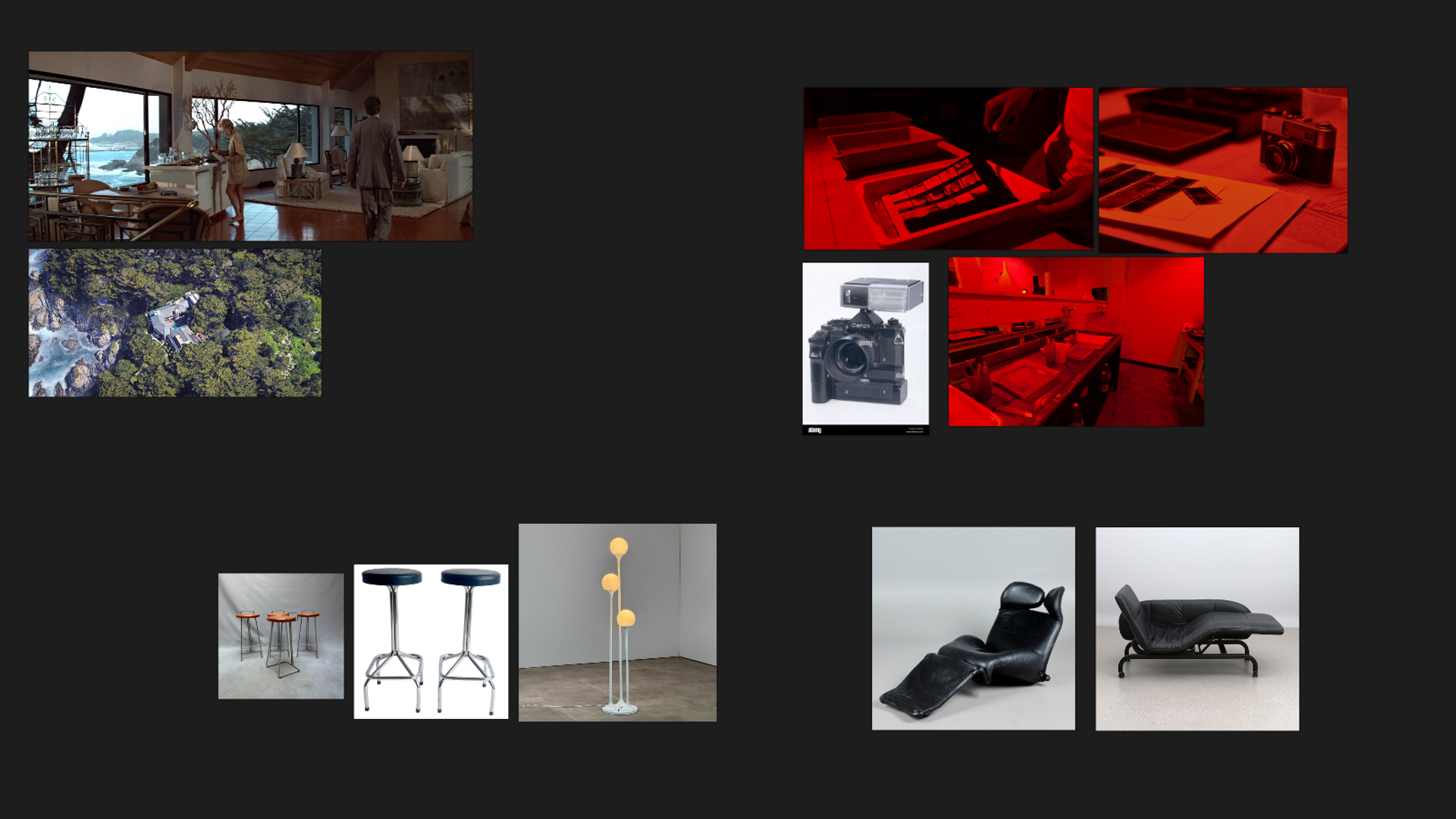
The project began with a photo development mechanic, which I used as the foundation for a thriller-inspired level influenced by films such as Basic Instinct and Blow-Up, and the visual language of neo-noir movies.

The project focuses on tone and atmosphere, using lighting, environment, and photographs to suggest fragments of a story rather than presenting a fully defined narrative.

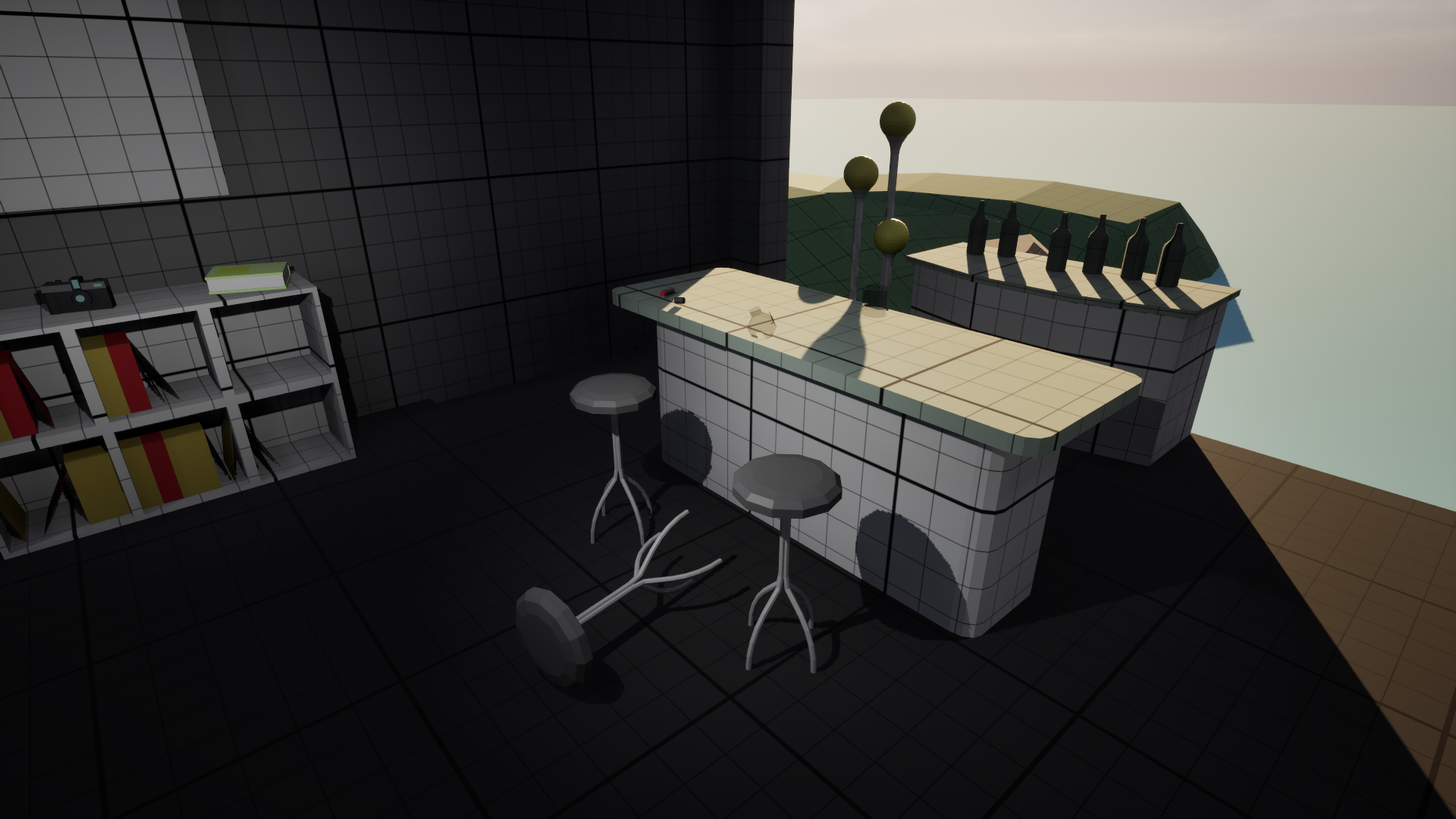
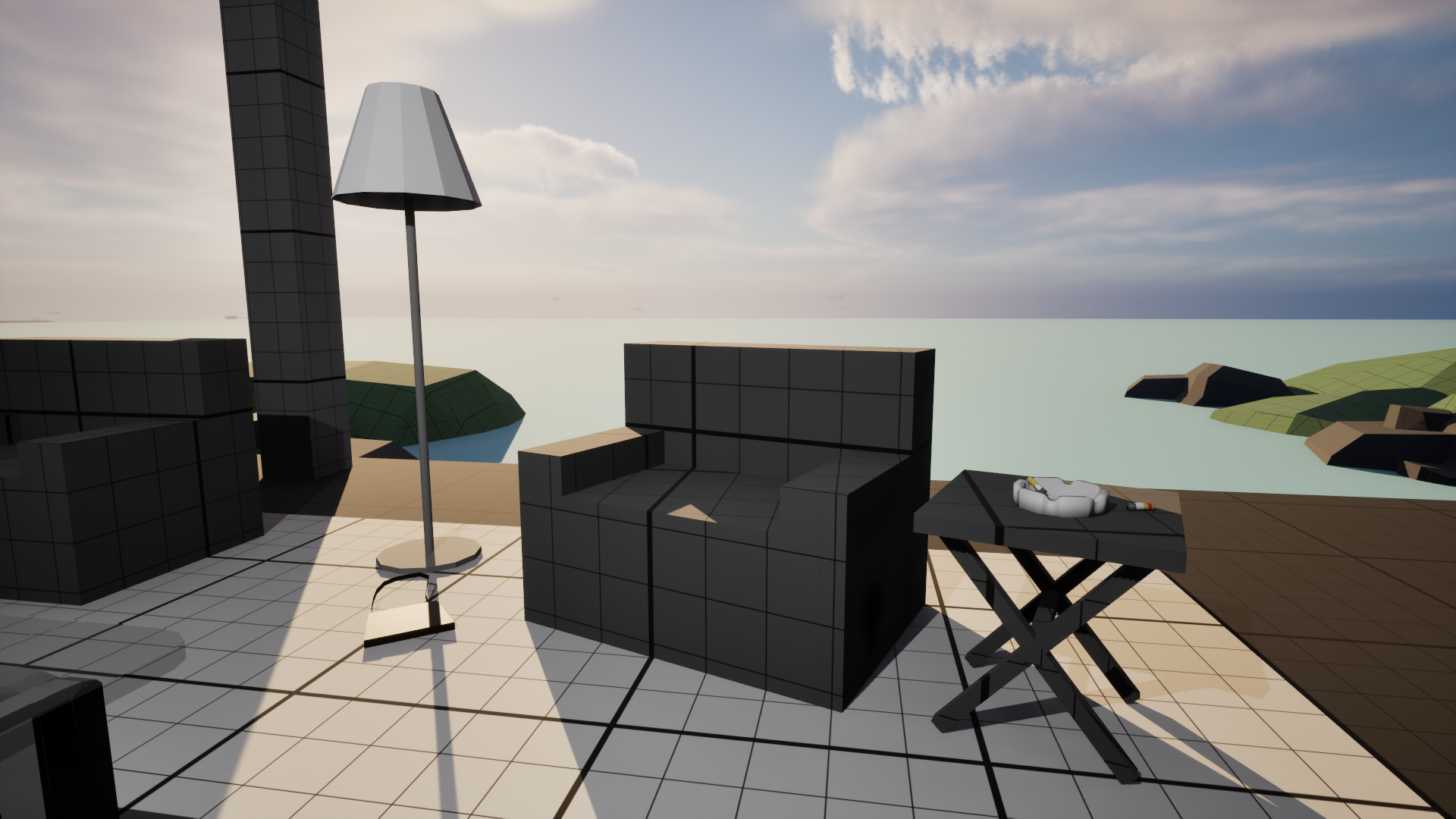
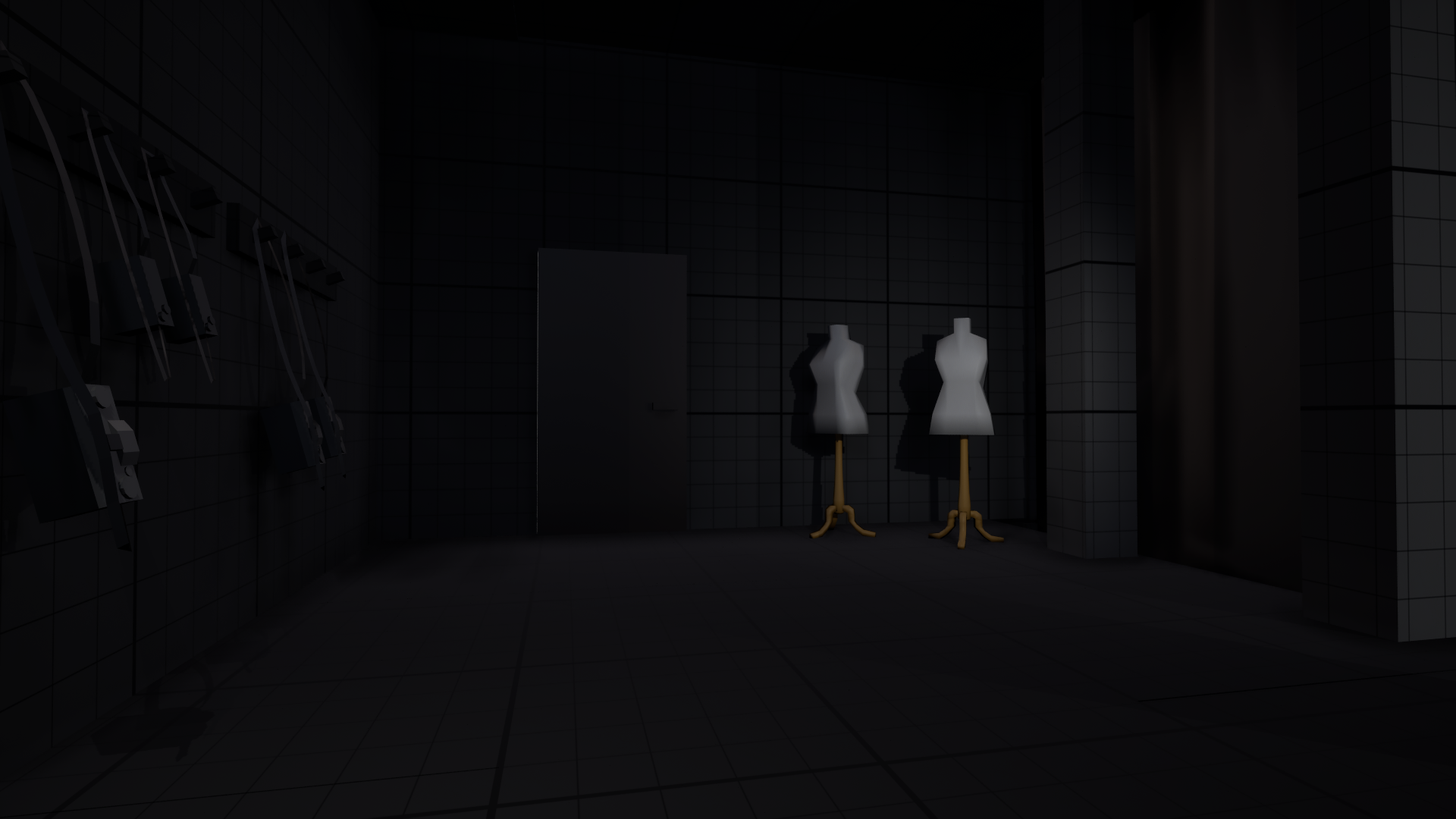
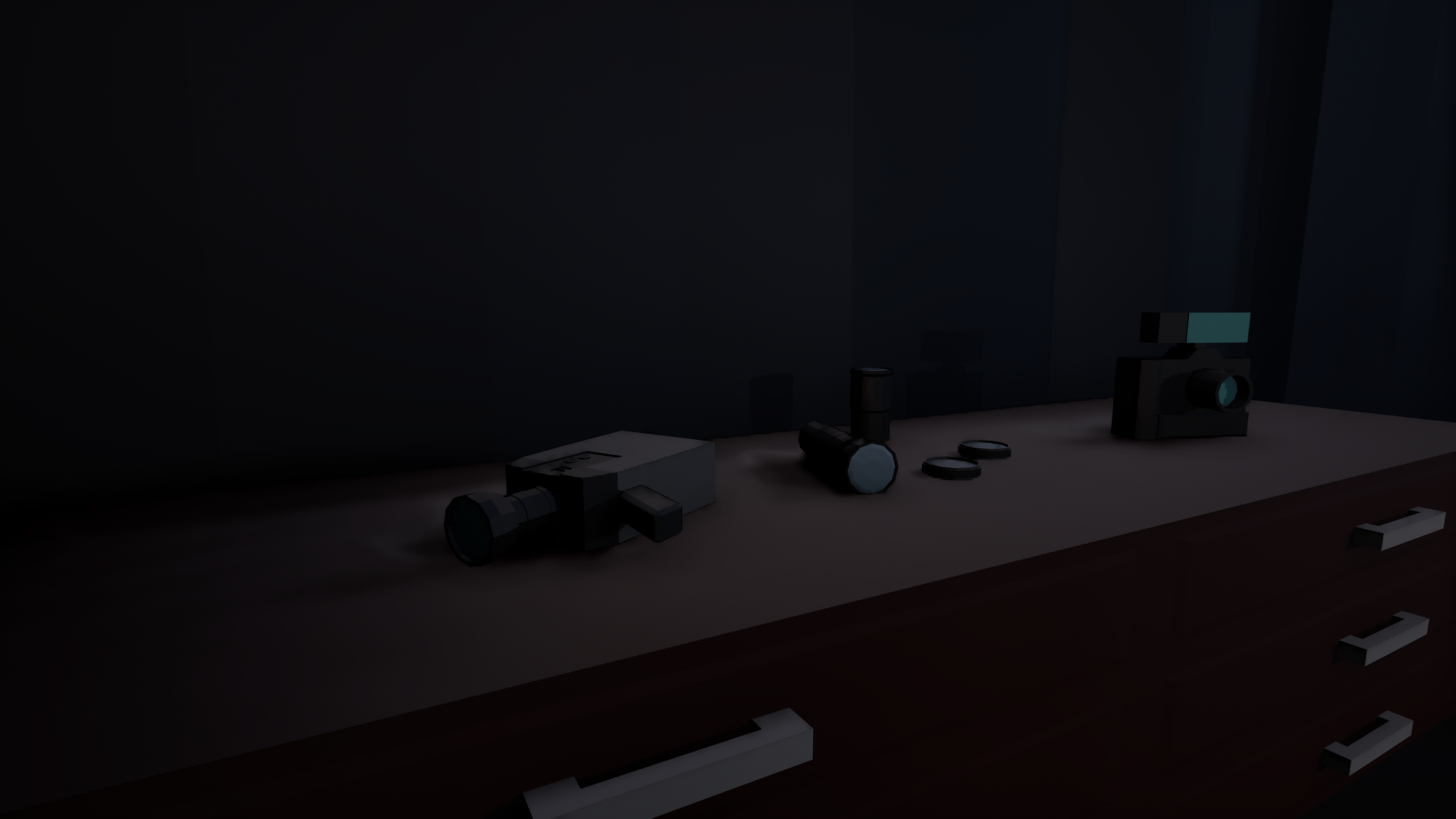
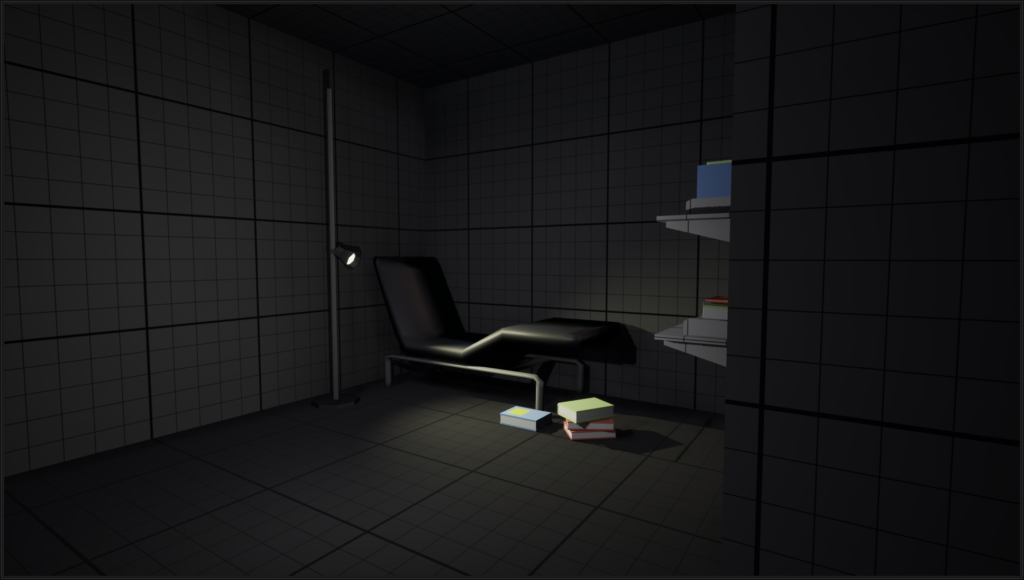
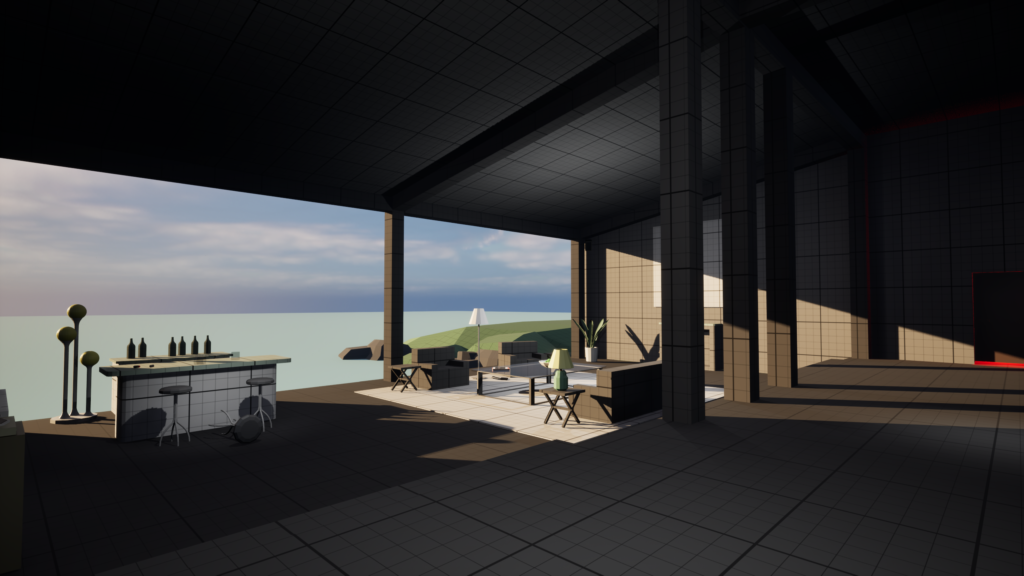
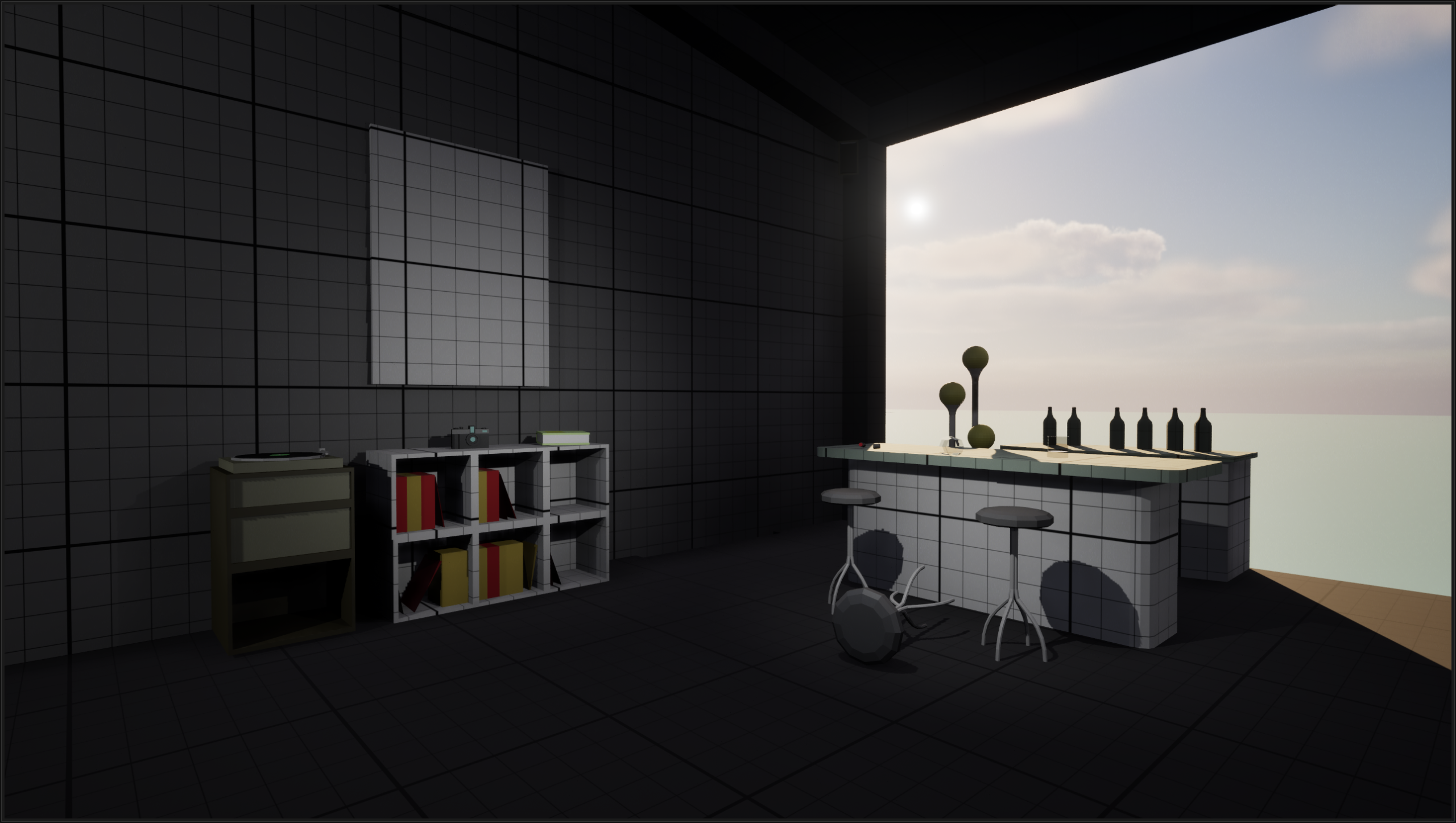
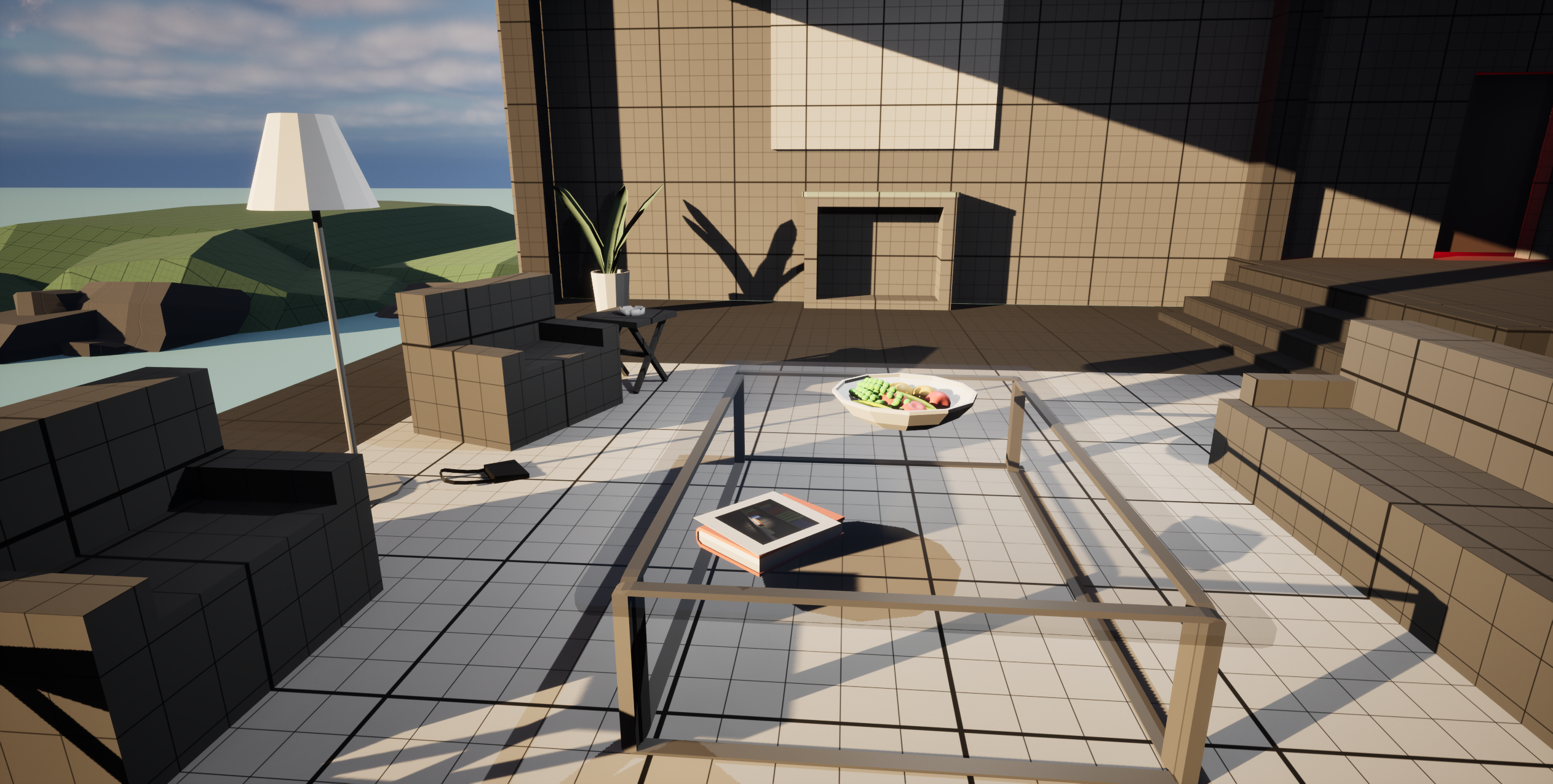
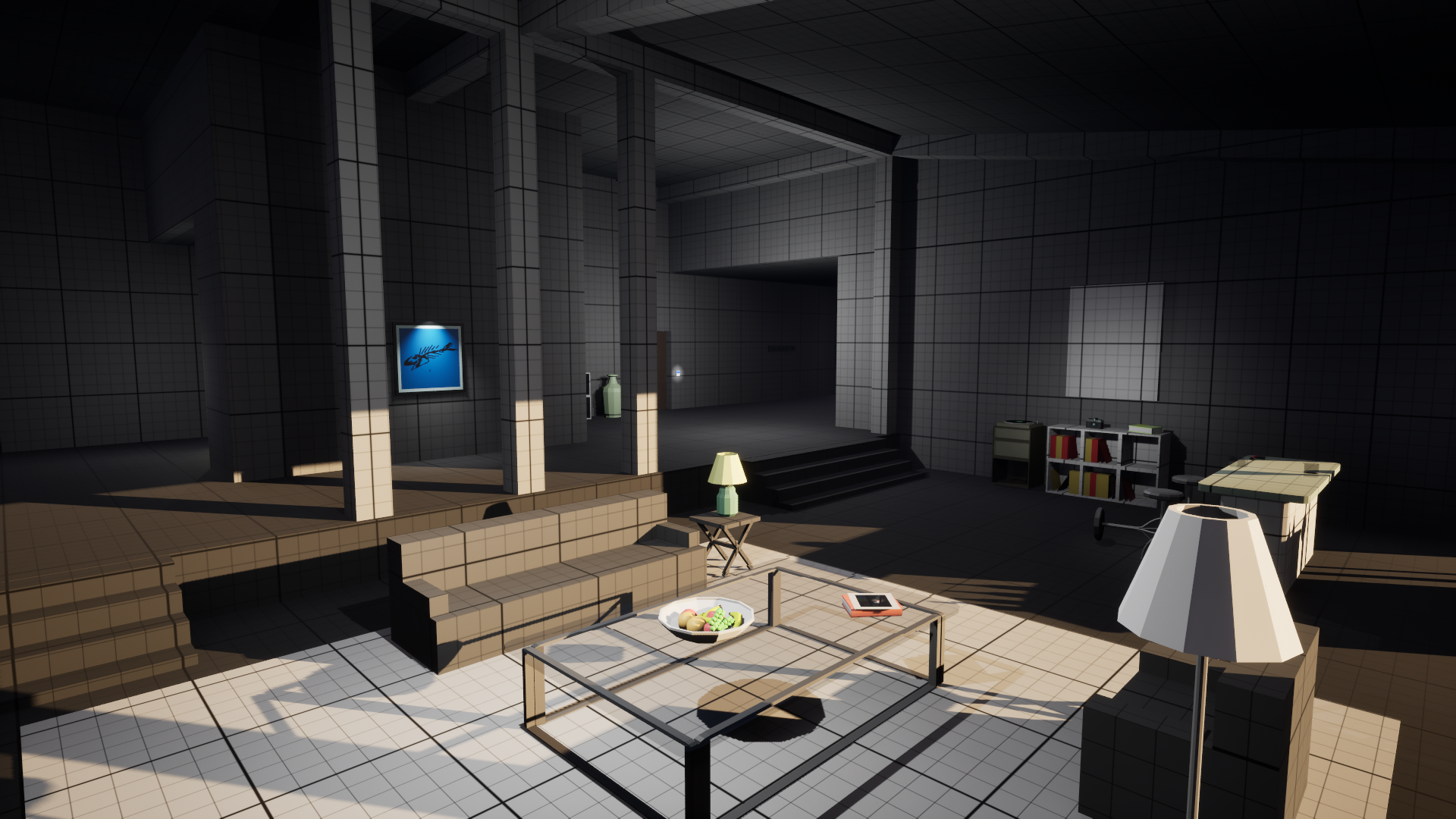
The apartment is designed to suggest the life of a successful photographer. Modernist architecture, designer furniture, photography equipment, books, and a carefully curated interior are meant to suggest a cultured and successful individual.

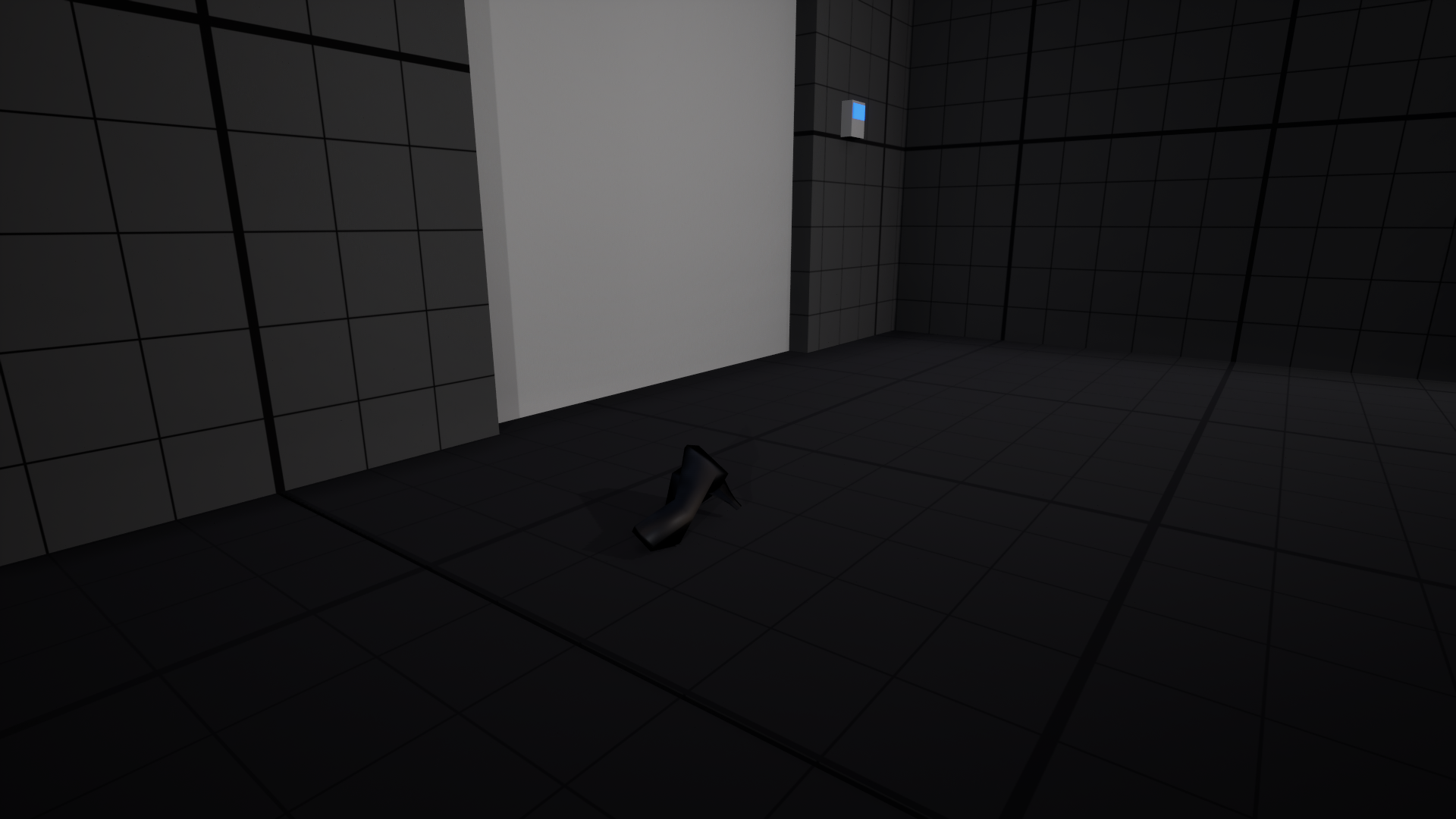
In contrast, smaller details — an ashtray with lipstick marks, a knocked-over bar stool, a handbag left behind, a single high heel near the final door — are meant to imply that something is wrong, and that something may have happened here.

Here, the photographs mainly function as progression, unlocking new areas of the apartment. In a larger production, they could instead reveal more narrative information and play a larger role in the storytelling.

Puzzles

Puzzle Design

The puzzles are structured to gradually introduce mechanics and observation-based gameplay, increasing in complexity and combining previously learned elements in the final puzzle.

Puzzle 1 – Living room - Exploration & Discovery

Introduces exploration and the clue system.
The player finds a photograph that hints at a specific location in the house. By investigating that location, the player discovers a key hidden inside a book, which unlocks the darkroom.

Introduction

The player is introduced to the house and encouraged to explore the environment.

Exploration

The level is structured into distinct zones to pace exploration and control how much information the player is exposed to at a time, preventing the player from feeling overwhelmed.

Clue

The player finds a photograph showing a location in the house. This introduces the idea that photographs contain important information and can be used as clues.

Investigation & Reward

By investigating the location shown in the photograph, the player discovers a key hidden inside a book. This reinforces the idea that careful observation leads to progression.

Puzzle 2 – The Darkroom - Development & Revelation

Puzzle 2 introduces the darkroom and the core gameplay mechanic of developing photographs to reveal new information.

Introduction

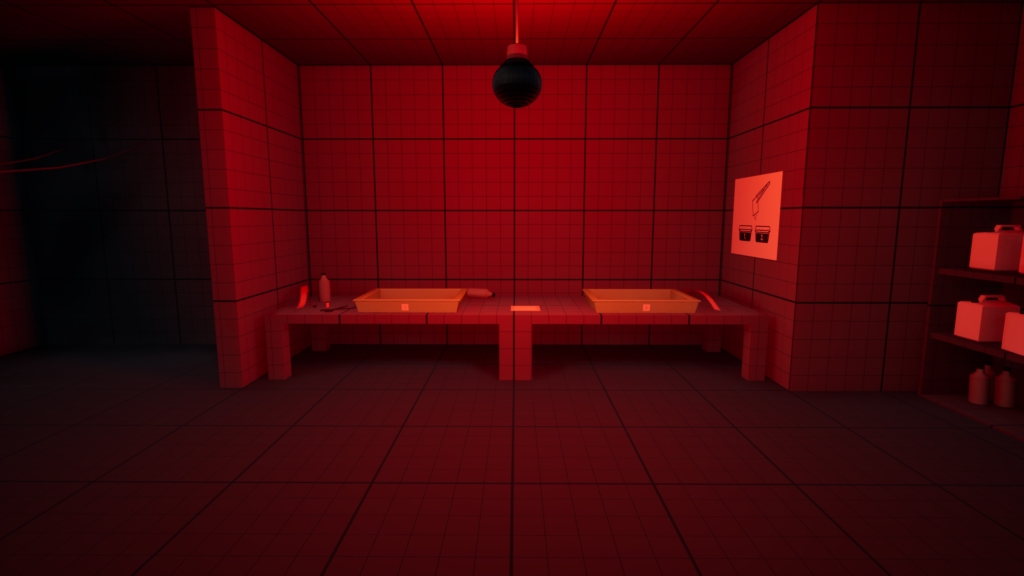
The player enters the darkroom and is immediately introduced to the developing process, with the equipment placed directly in front of the player.

Developing the Photograph

By dipping the photograph into two chemical baths, a new image appears, revealing a keypad door located elsewhere in the house. The photograph now acts as information that guides the player’s next objective.

A Second Photograph

To unlock the door, the player must develop a second photograph, which reveals the final number needed for the keypad. The player must now combine information from multiple photographs to progress.

Puzzle 3 – Sequencing & Synthesis

Puzzle 3 combines information from photographs, colors, and environmental clues to solve the final keypad puzzle.

Color Coding

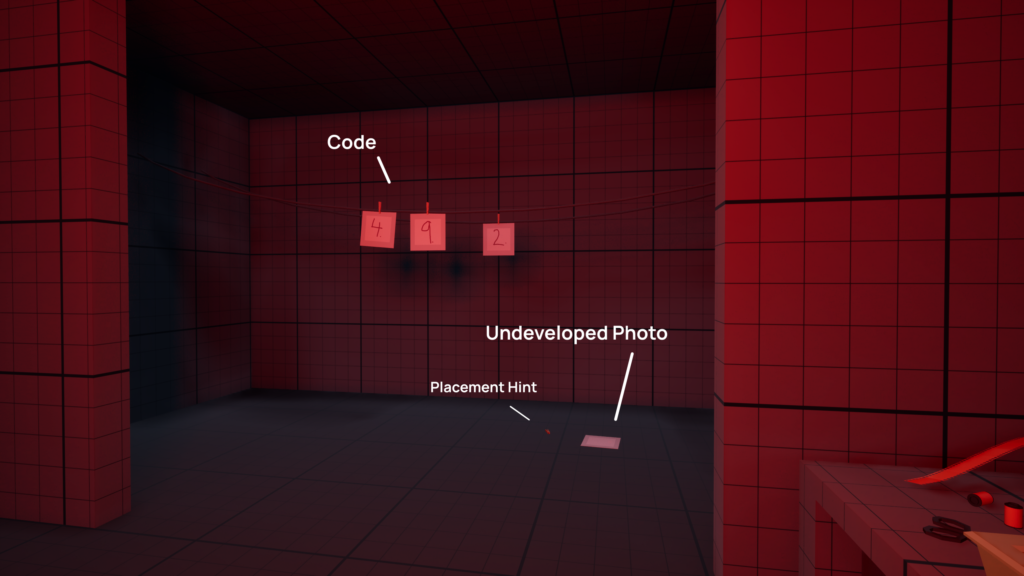
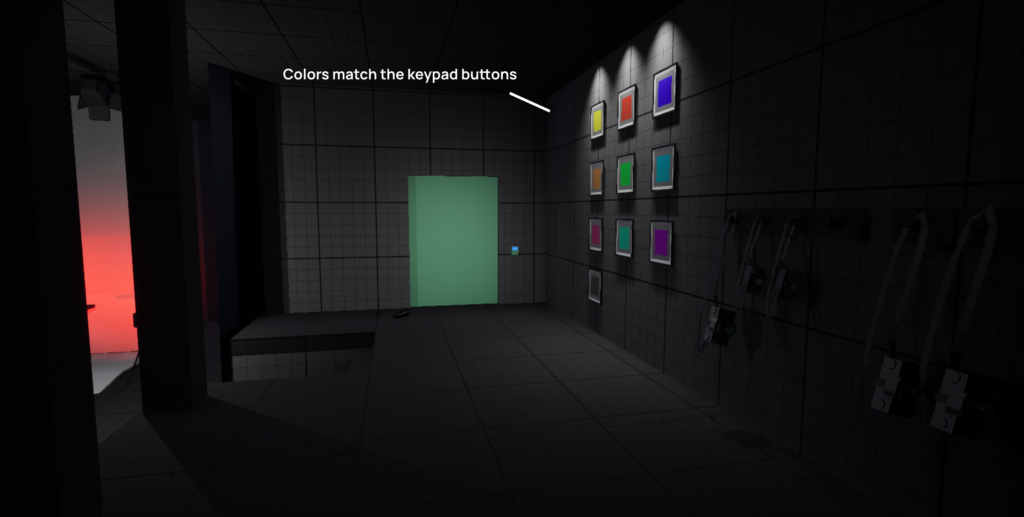
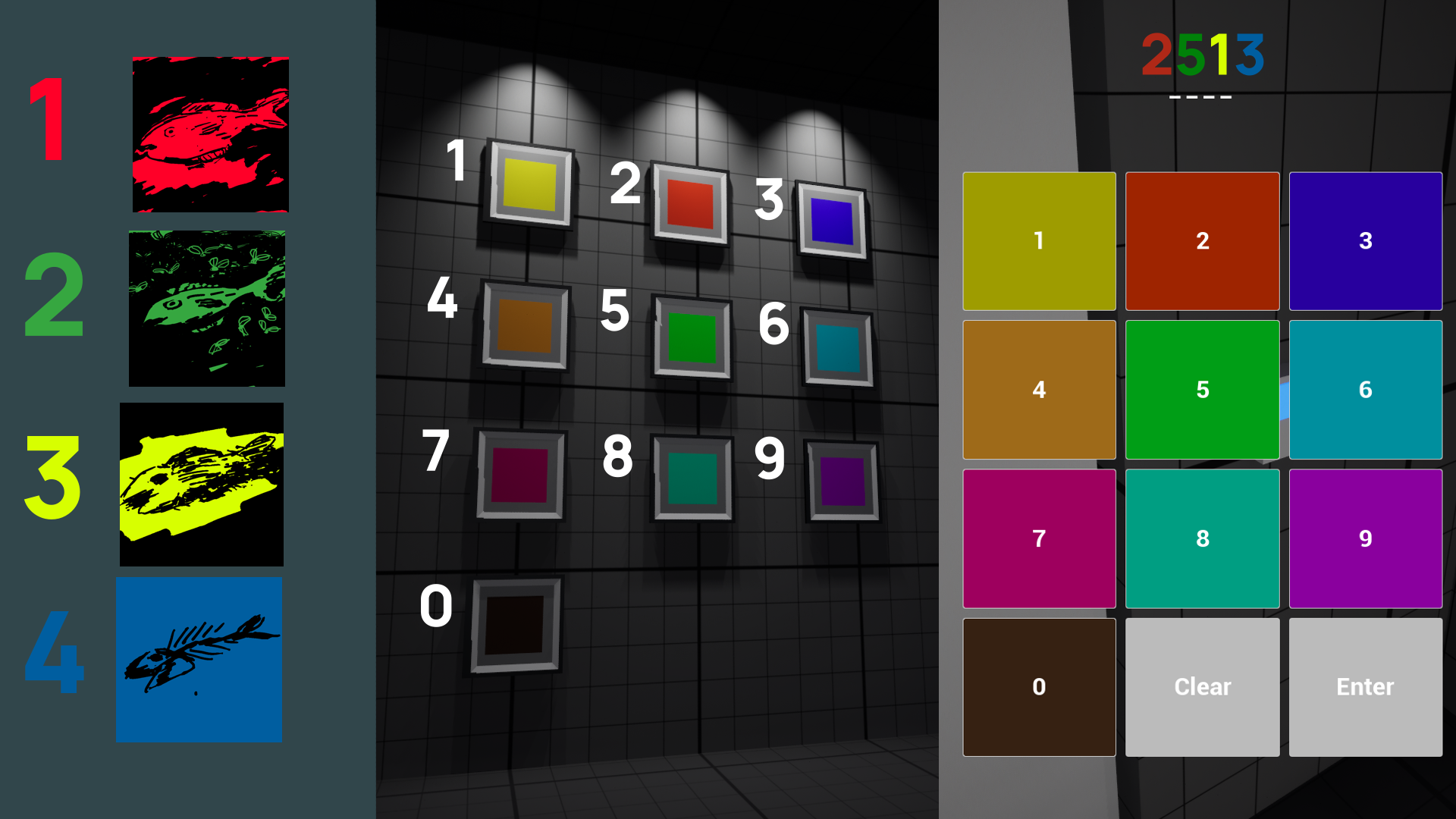
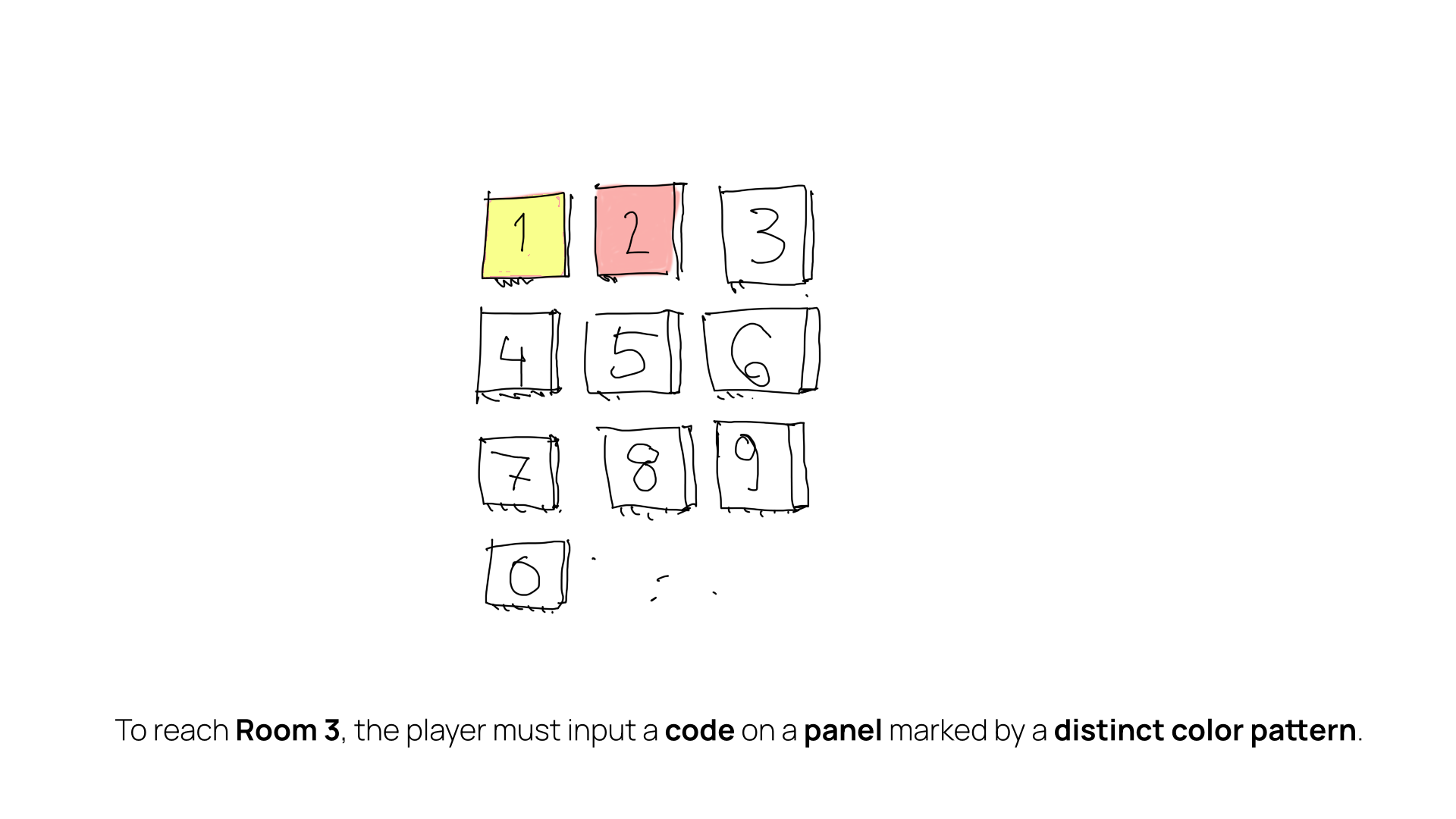
The player enters the hallway and encounters a keypad with color-coded buttons. Next to the door is a row of color-coded photographs, arranged in the same order as the buttons on the keypad.

The Photo Studio

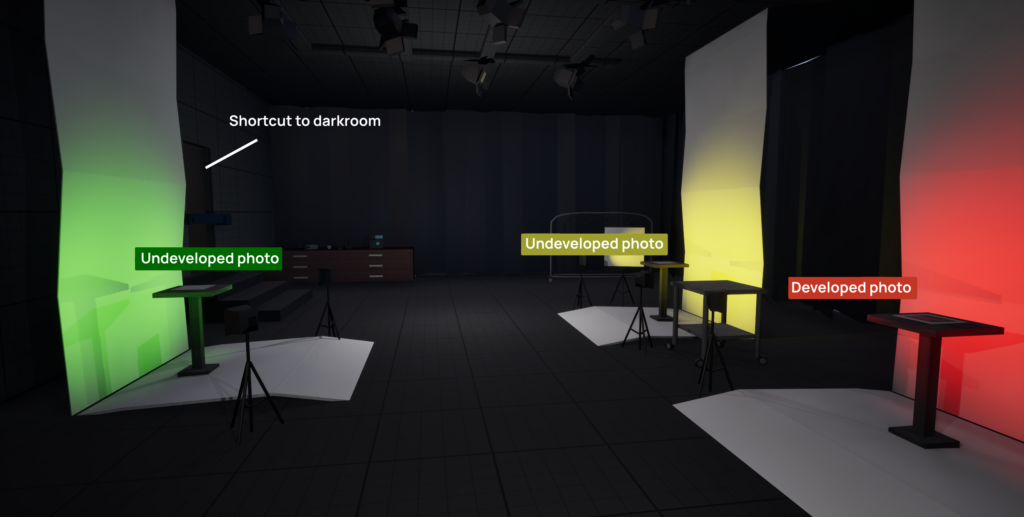
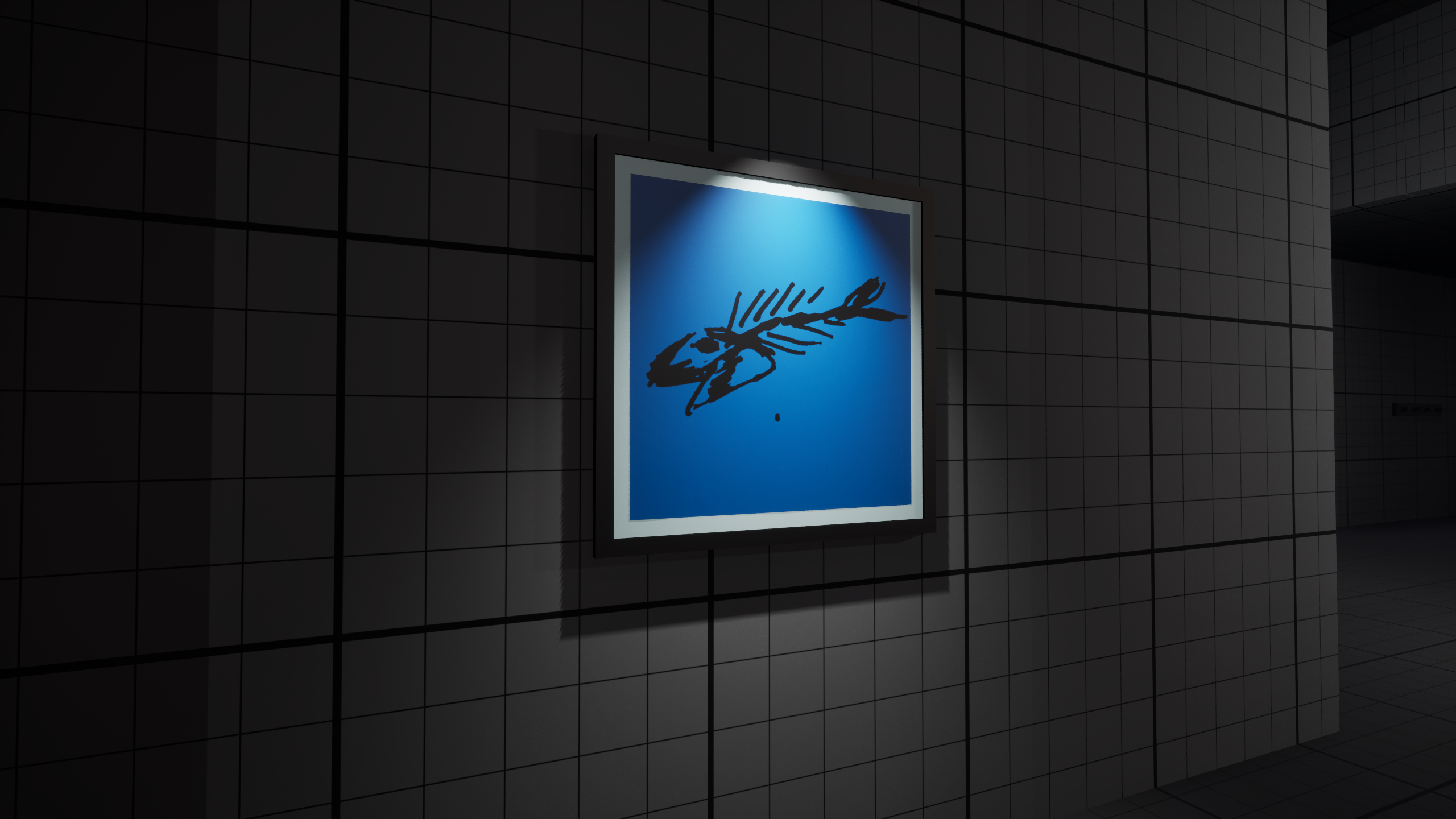
Inside the studio, the player finds three illuminated pedestals, each displaying a photograph. One of the photographs is already developed, while the other two must be developed by the player in the photodevelopment area. These three photographs together form the sequence that the player must interpret and use to determine the correct code for the locked door.

Developing the Photographs

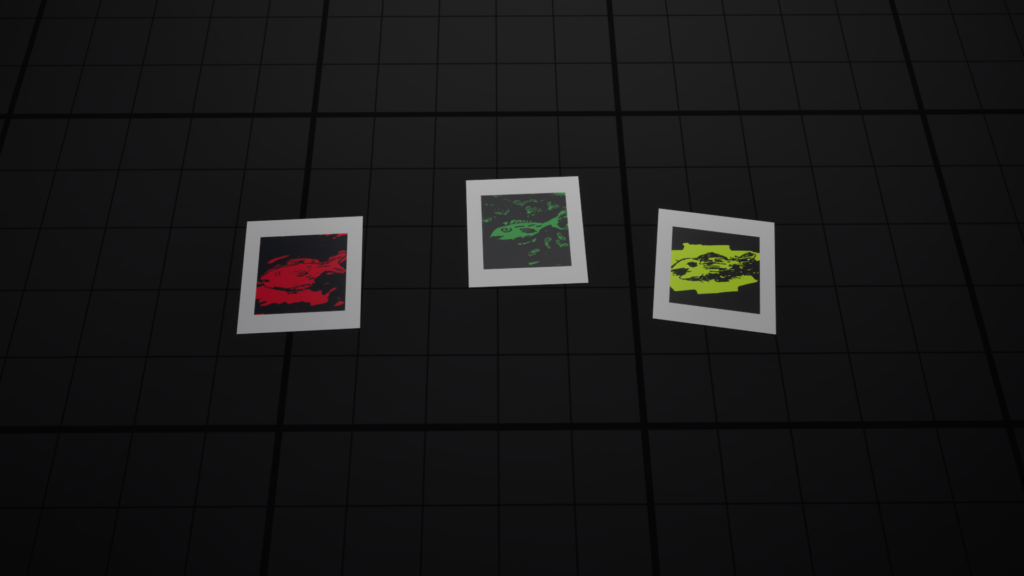
By developing the photographs in the darkroom, the player discovers additional images. The images show the same subject in different stages, which introduces the idea that the images must be placed in chronological order.

The Final Number

The final number is found earlier in the level, requiring the player to revisit a previous room and connect information from multiple areas.

Combining Color and Order

By developing the photographs in the darkroom, the player discovers additional images. The images show the same subject in different stages, which introduces the idea that the images must be placed in chronological order.

Process:

Research and Exploration:

The project builds on a photo development puzzle I created during an assignment at The Game Assembly. The mechanic and its theme felt worth exploring further, so this project became an opportunity to build a full level around it.

From the beginning, I decided to structure the level around three puzzles, with photo development as the central mechanic. The environment and tone were inspired by thriller films, and I used the house from Basic Instinct as an early visual reference.

I began sketching different layouts based on the idea of one puzzle per room, which established the overall structure of the level.

Play testing

Playtesting became more important as the level began to take shape. It was mainly used to evaluate player movement through the spaces, clarity of objectives, and the difficulty of the puzzles.

Observing how players moved through the rooms helped me adjust object placement, pacing, and navigation. Playtesting was also used to find a better balance in the puzzles and ensure that the player had enough information to progress without the solutions becoming too obvious.

Building the level:

Since I knew early on what each room needed to contain, I began the layout work on paper, sketching the sequence and structure of the spaces before building the level in Blender and Unreal, where I adjusted proportions and layout along the way.

Much of the work then focused on defining clear points of interest and creating good player movement around them — making it easy to move through and around objects, observe the environment, find clues, and naturally move between interactive elements. The layout and movement were designed to support the player’s role as an observer, studying the environment and gradually connecting clues across the apartment.

Closing Thoughts:

This project allowed me to explore puzzle structure, progression, and player movement through space.
While there is still room to improve the visual clarity of certain clues, I believe the level has a strong structural foundation and works well from a level design perspective. With additional narrative elements, visual polish, and more playtesting, this could be developed into a larger experience.